Colored glass art captures light, color, and texture in a way few other mediums can match. From glowing stained glass window panels to organic sea glass mosaics and minimalist fused glass sculptures, working with translucent hues allows natural light to become an active part of your home decor. Whether you are an experienced glass artist, a weekend DIY enthusiast, or someone searching for curated visual inspiration, these 20 aesthetic colored glass art ideas will elevate your living spaces with radiant charm and timeless elegance.
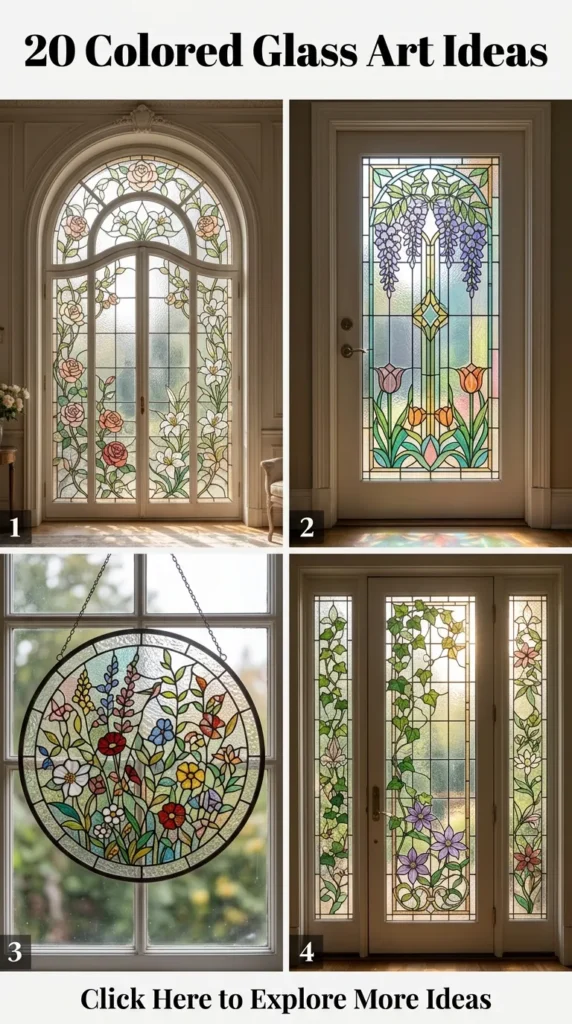
1. Botanical Stained Glass Suncatchers
Botanical suncatchers bring the beauty of nature indoors by encasing pressed-leaf silhouettes, delicate floral profiles, and winding ivy patterns inside vibrant translucent glass. These hanging accents catch shifting daylight, casting lush green and amber hues across walls and floors.
- What This Idea Means: Capturing organic botanical motifs—monstera leaves, eucalyptus sprigs, pressed ferns, or wildflower blooms—using the traditional copper foil method to produce modern, nature-inspired window ornaments.
- How to Make It: Trace your chosen leaf pattern onto thick cardstock and transfer the template pieces onto sheets of textured green, olive, and amber art glass. Score and break the glass using a pistol-grip glass cutter and running pliers. Grind each edge smooth on a water-cooled glass grinder, wrap every perimeter in adhesive copper foil tape, burnish firmly with a fid, and solder the seams together using a 60/40 lead-tin or lead-free solder wire. Attach a small copper jump ring to the top solder bead for hanging.
- Tips & Variations: Combine cathedral (transparent) glass with wispy opalescent glass to simulate natural leaf veining. For an ethereal variation, sandwich real dried pressed flowers between two thin layers of clear float glass before soldering the exterior frame.
2. Geometric Fused Glass Trinket Dishes
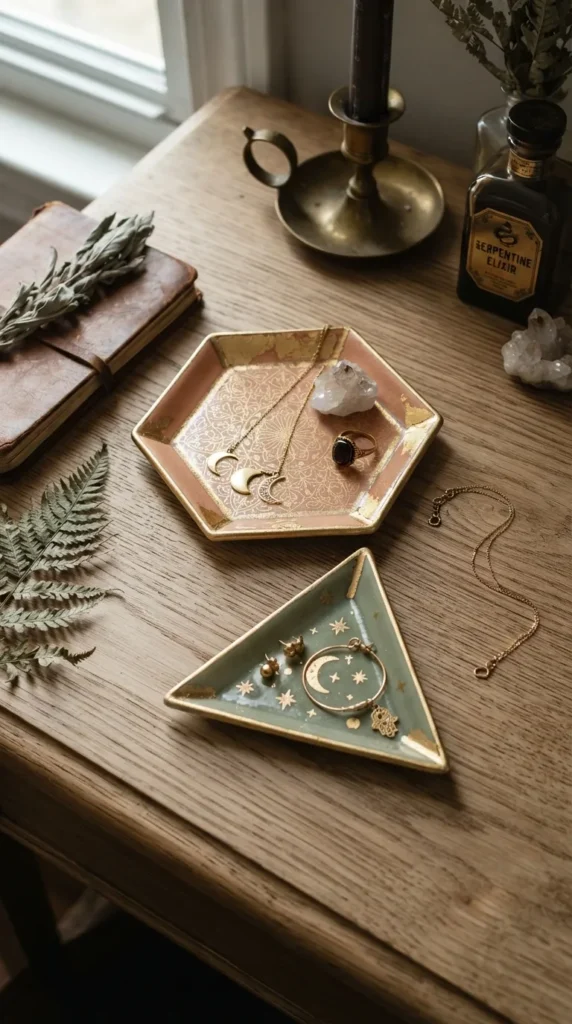
Fused glass dishes combine clean mid-century lines with rich layered tones. Through controlled kiln firing, crisp glass shards melt into smooth, functional bowls perfect for jewelry, keys, or bedside accents.
- What This Idea Means: Modern, abstract design meets everyday utility. Layering colorful sheet glass shapes creates depth, optical blending, and gentle tactile curves.
- How to Make It: Cut a 4×4-inch or 6×6-inch square of clear or milk-white fusible sheet glass (matching standard COE 90 or COE 96). Cut smaller geometric shapes—triangles, half-moons, and thin stringers—from vibrant contrasting glass. Arrange your design on the base and secure with a tiny drop of organic glass glue. Fire the piece in a glass kiln to a full fuse (approx. 1450°F–1480°F) until flat and smooth. After cooling, place the flat fused tile over a ceramic dish slump mold and run a second slump firing (approx. 1220°F–1250°F) to give it a curved profile.
- Tips & Variations: Use dichroic glass accents on deep cobalt or emerald bases for a metallic, iridescent shimmer. Alternatively, maintain a minimalist aesthetic using muted earth tones like terracotta, sage, and translucent taupe.
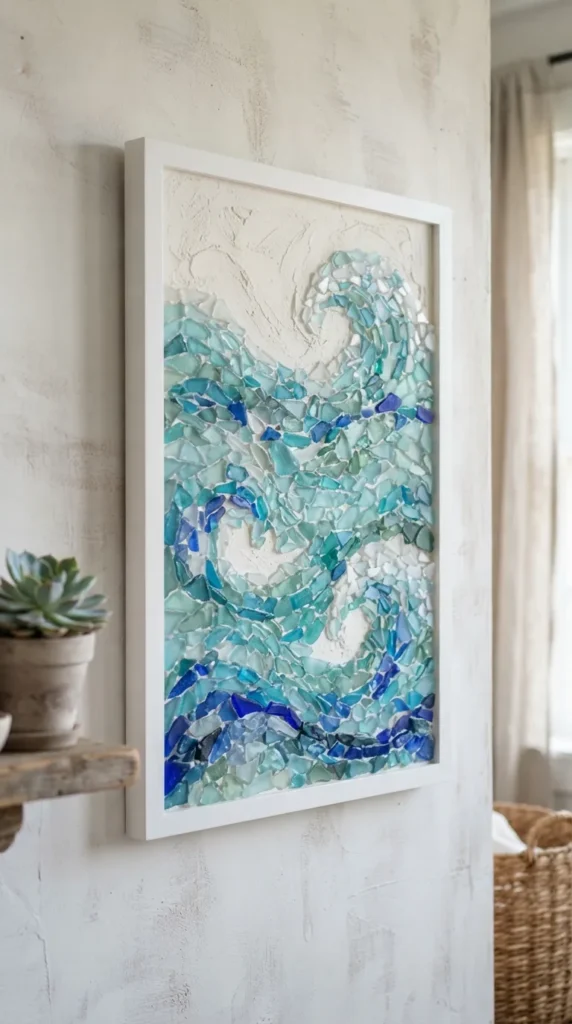
3. Coastal Sea Glass Mosaic Wall Panels
Sea glass mosaics celebrate weathered, tumbled glass fragments arranged in fluid waves, ocean gradients, or abstract shorelines mounted in wooden display frames.
- What This Idea Means: Upcycling naturally tumbled ocean glass or cultured matte sea glass into tactile, textured fine-art wall decor that channels seaside serenity.
- How to Make It: Procure a sturdy wooden shadowbox or float frame. Prepare a solid white backing board sealed with a water-resistant primer. Sort your sea glass collection into color gradients ranging from deep aqua and cobalt to pale seafoam, frosted white, and rare amber. Apply clear silicone or non-yellowing epoxy adhesive to each piece, pressing them closely together in concentric ripples or wave patterns. Allow the adhesive to cure completely for 24 hours.
- Tips & Variations: Leave the gaps open for a raw, raised sculptural look, or fill the crevices with fine white sanded grout for a traditional tiled mosaic finish. Adding tiny raw brass rods or driftwood accents between glass clusters introduces contrasting warmth.

4. Moroccan-Style Cut Glass Lanterns
Moroccan lanterns feature rich jewel tones, intricate filigree, and faceted glass panels that cast dramatic, kaleidoscopic shadows across any room when illuminated from within.
- What This Idea Means: A bohemian lighting design focused on intricate metal fretwork holding deeply saturated ruby, saffron, amethyst, and turquoise textured glass panels.
- How to Make It: Upcycle an existing open-frame metal lantern or construct an authentic stained glass casing using geometric brass channel zinc came. Cut richly textured architectural glass (such as Florentine, ripple, or glue-chip glass) to match the lantern’s window dimensions. Solder the panels firmly into the frame, then apply a dark patina chemical to age the solder seams. Place an LED pillar candle or an amber filament bulb inside to project ambient warmth.
- Tips & Variations: Paint ornate gold mandala line-art along the exterior glass borders using dimensional glass relief paint (pebeo outliner) to replicate vintage Mediterranean bazaar lanterns without complex metal cutting.
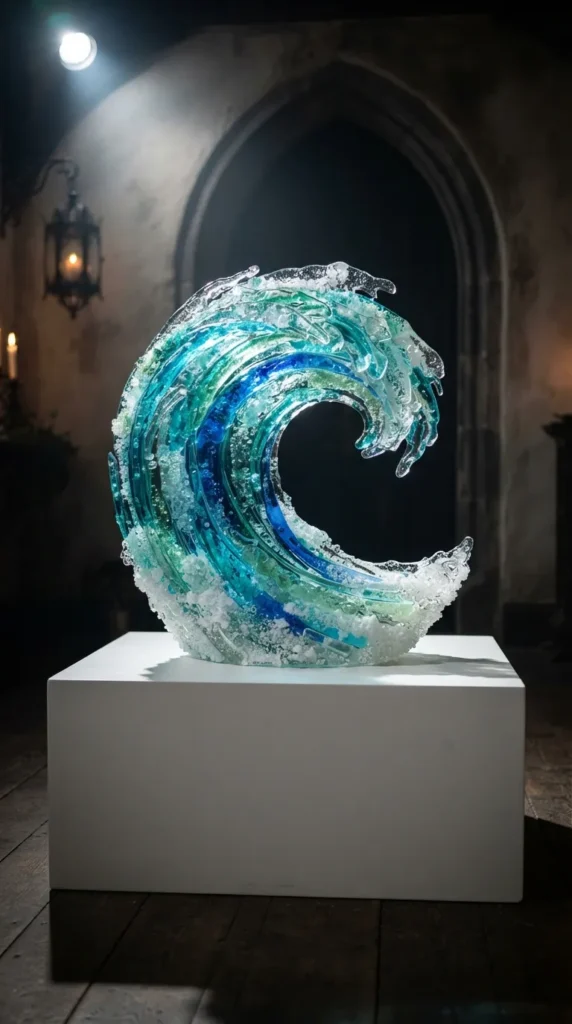
5. Freeform Fused Glass Wave Sculptures
These dynamic tabletop sculptures capture the kinetic crest and translucent spray of breaking ocean waves through curved, freestanding kiln-fired glass.
- What This Idea Means: Turning rigid sheets of glass into fluid, water-like forms that stand upright without an external support frame.
- How to Make It: Create a multi-layered panel using clear sheet glass as a foundation. Layer transparent cyan, royal blue, turquoise, and deep navy glass frits (crushed glass grains) in varying grain sizes ranging from coarse rocks to fine powder. Add pure white enamel powders and clear glass noodles at the crest to mimic churning sea foam. Fire to a tack-fuse (approx. 1360°F) to retain dimensional texture. Finally, slump the rectangular panel over a stainless steel S-curve or wave mold during a second firing cycle.
- Tips & Variations: Introduce small flecks of 24k gold leaf or dichroic glass frit near the crest of the wave to capture bright reflections when illuminated by directional spotlighting.

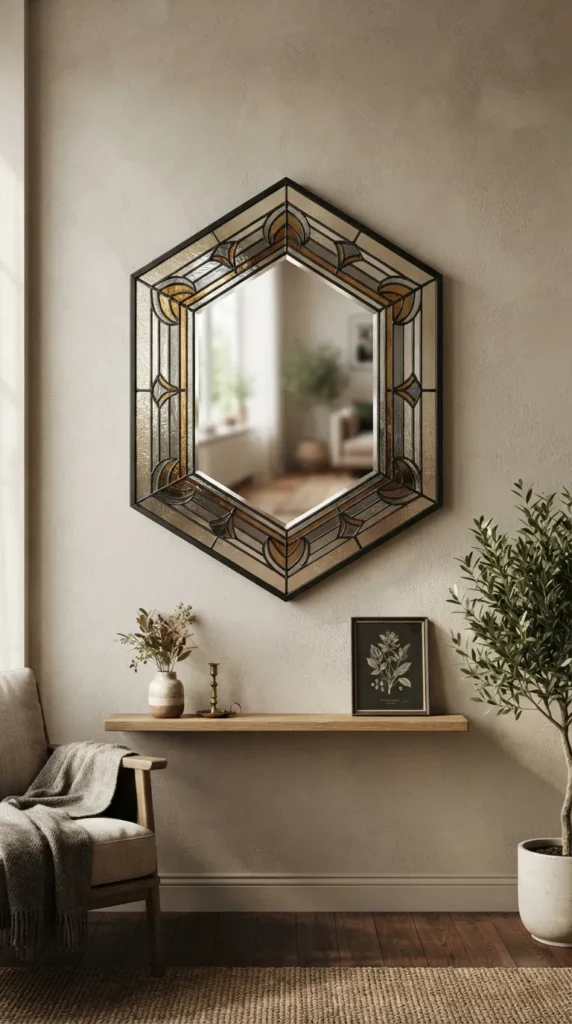
6. Minimalist Stained Glass Hexagon Mirrors
Blending pristine reflective surfaces with tinted art glass borders creates a contemporary, functional statement piece for hallways, bedrooms, and vanity walls.
- What This Idea Means: A modern take on stained glass that pairs hexagonal mirror tiles with warm champagne, peach, and smoky gray stained glass borders.
- How to Make It: Cut a central hexagon out of quality 3mm silver mirror sheet. Cut matching trapezoid or triangular glass shapes from complementary tinted sheet glass to surround the mirror center. Apply waterproof mirror-edge sealant around the mirror cuts to prevent desilvering (black edge rot). Wrap all exterior and interior seams with copper foil, solder the joins with neat, raised rounded beads, and finish with a modern black patina or bright copper wash.
- Tips & Variations: Extend one corner of the mirror with an asymmetric cluster of clear bevels and pale blush glass triangles to create an eye-catching geometric cascade.




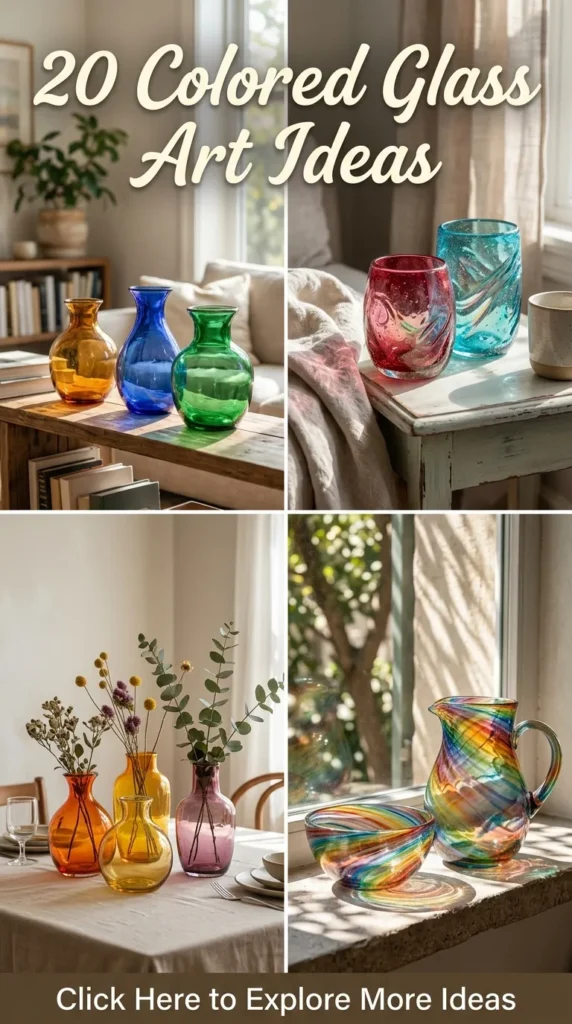
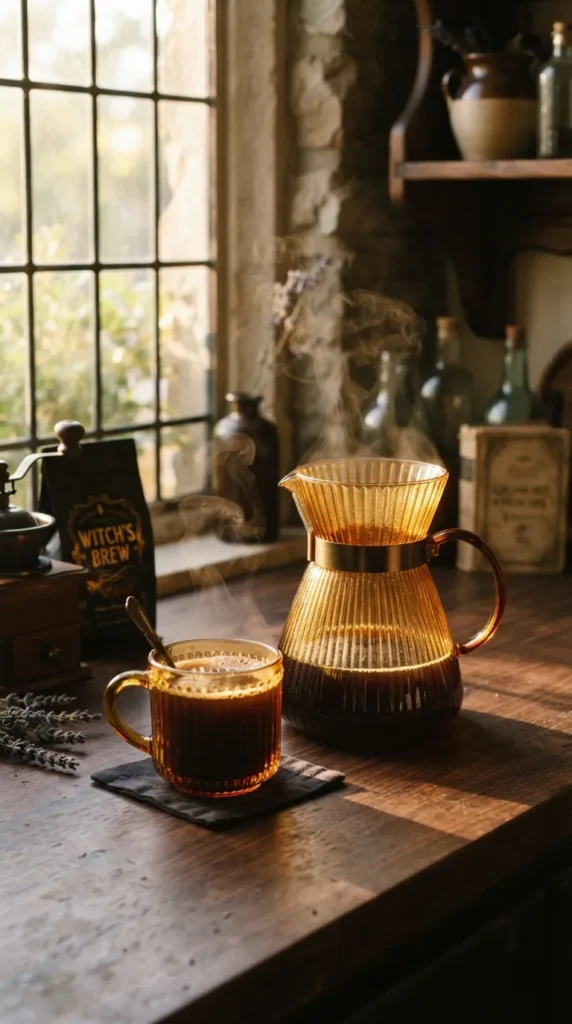
7. Vintage Ribbed Amber Glass Pour-Over & Decanter Sets
Vintage drinkware in amber, olive, and smoked topaz tones balances nostalgic 1970s warmth with sophisticated bar cart styling.
- What This Idea Means: Handblown or kiln-cast drinkware, carafes, and pour-over carafes featuring rich fluted textures, heavy pedestal bases, and rich amber translucence.
- How to Make It: Hot glass artisans blow molten amber-tinted soda-lime glass into a ribbed wooden or cast-iron optic mold to imprint linear ridges before expanding the bubble to full scale. The base is shaped with wood paddles, and the neck is tooled to create an ergonomic pouring lip. For home crafters, similar aesthetics are achieved by cold-working vintage ribbed glass vessels, fusing custom colored glass dripper cones, or upcycling retro textured glass.
- Tips & Variations: Pair a ribbed amber carafe with contrasting smoke-gray or forest green tumblers for a collected, mid-century modern aesthetic.
8. Layered 3D Resin and Tinted Glass Ocean Landscapes
These hybrid mixed-media panels suspend tinted glass shards, aqua glass gravel, and clear curing resin across multiple tiers to create a deep, diorama-like ocean abyss.
- What This Idea Means: A multi-layered landscape combining the crisp sparkle of broken colored glass with the crystal-clear depth of cast epoxy resin.
- How to Make It: Build a deep wooden cradled painting board or clear acrylic shadowbox. Pour an initial layer of deep navy resin, embedding dark blue and charcoal crushed glass chunks at the bottom. Once partially cured, pour a second layer of turquoise resin, scattering medium-grain aqua glass and seafoam chips. Finish with a crystal-clear topcoat, adding floating white glass stringers and fine micro-bubbles along the surface edges to simulate shore foam.
- Tips & Variations: Backlight the wooden shadowbox with an internal LED strip behind frosted diffuser acrylic to turn the deep ocean panel into an illuminated ambient night light.
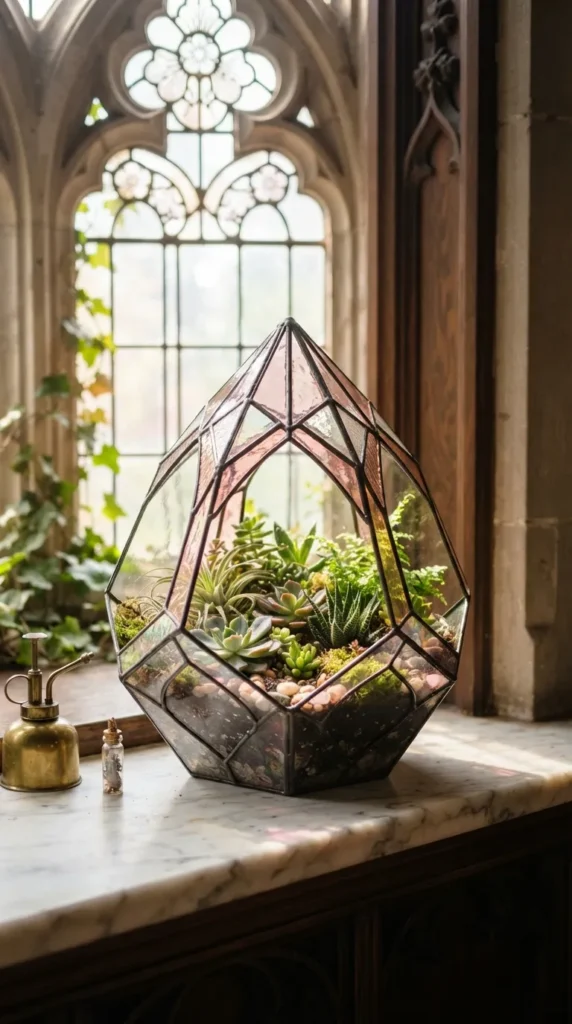
9. Stained Glass Floral Terrariums
Geometric stained glass terrariums enclose miniature succulent gardens, moss scapes, and air plants within faceted, jewel-toned glass structures.
- What This Idea Means: Three-dimensional architectural glass containers designed with open top panels to house micro-botanical arrangements.
- How to Make It: Cut pentagonal and triangular panes from clear glass, accented with soft pastel borders in seafoam, rose, and amber cathedral glass. Assemble the facets into a geometric icosahedron or faceted house shape using painter’s tape to hold the angles steady. Solder each exterior and interior vertex securely using 60/40 solder. Thoroughly clean the flux off the glass, apply a black or copper patina, and seal the interior bottom seams with silicone glue to hold soil and moisture.
- Tips & Variations: Leave one large side facet completely open for easy maintenance of moisture-loving fittonias, pillow moss, or assorted tillandsia air plants.
10. Abstract Stained Glass Sunburst Windows
Sunburst window panels use bold, radiating linear segments of yellow, terracotta, blush, and cobalt glass to celebrate golden hour warmth.
- What This Idea Means: Mid-century and art deco-inspired geometric sunburst patterns that disperse dramatic bands of warm colored light throughout a room.
- How to Make It: Draft a half-circle sunburst pattern with radiating rays of varying widths. Select warm spectrum glass: translucent cadmium yellow, rich amber, deep coral, dusty rose, and dark plum for the contrasting sky. Cut, grind, and foil each radiating segment. Solder on a flat heat-resistant workboard, framing the curved upper perimeter with a sturdy zinc or lead U-channel came for structural rigidity.
- Tips & Variations: Intersperse panels of clear textured glass—such as ribbed, ripple, or hammered textures—within the sunbeams to scatter light beams across your interior spaces.
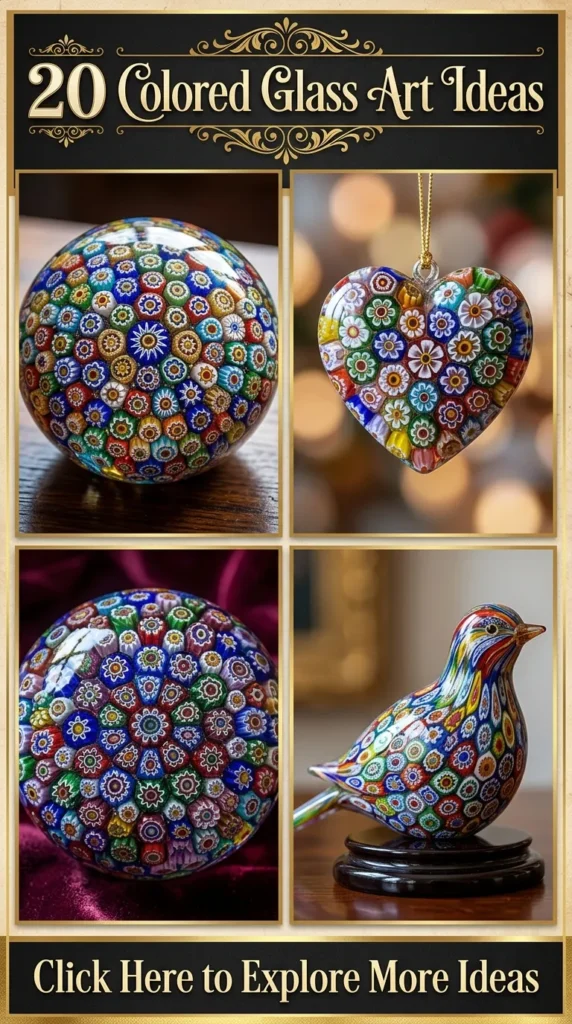
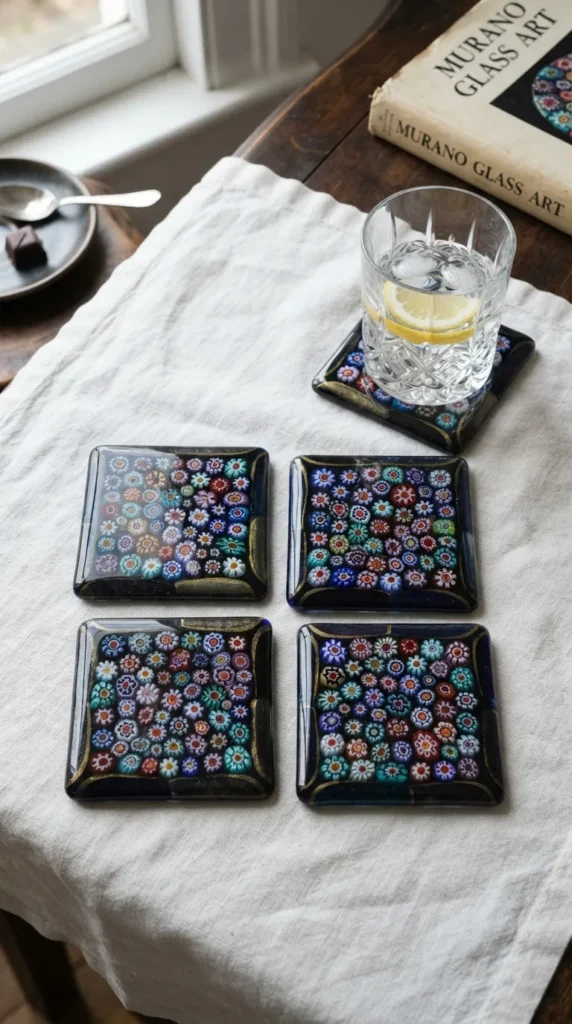
11. Murano-Inspired Fused Glass Millefiori Coasters
Millefiori (meaning “a thousand flowers”) features miniature, multi-colored glass flower patterns fused into clear glass bases to make vibrant drink coasters.
- What This Idea Means: Slicing prepared pattern glass rods (murrine) to reveal internal floral prints, which are then kiln-fused into smooth, durable glass tiles.
- How to Make It: Cut 4-inch squares of 3mm clear fusible glass. Arrange an array of colorful millefiori slices across the glass base, either in neat geometric grids or whimsical organic clusters. Fill empty spaces with clear fine glass frit. Place the assembled squares into a glass kiln and run a full-fuse firing profile (approx. 1460°F) until the surface becomes flat and glossy. Attach clear silicone bumper feet to each corner of the base once cooled.
- Tips & Variations: Create a monochromatic version by using only white, cobalt, and sky-blue millefiori slices over a solid navy glass base for a Mediterranean coastal feel.
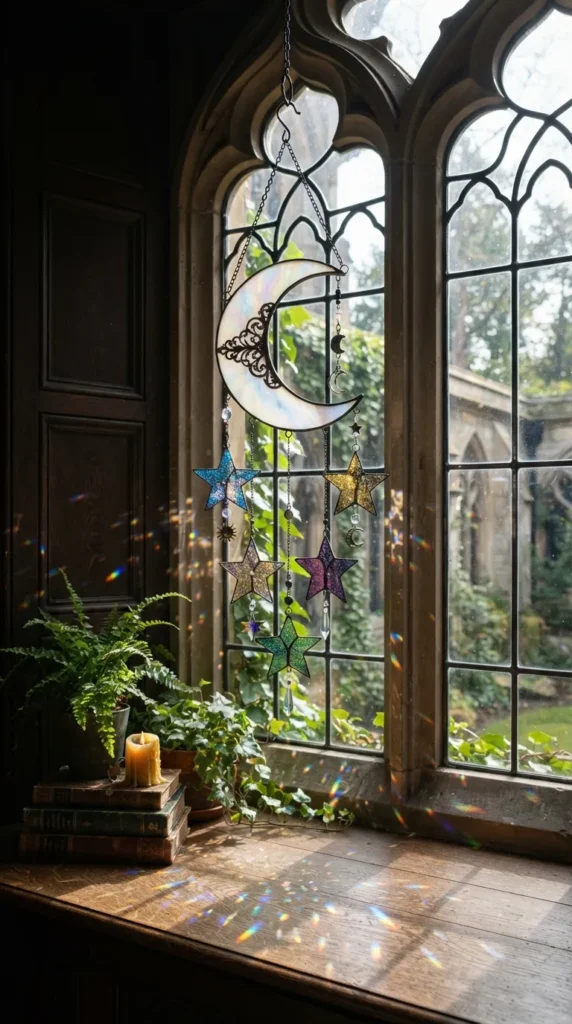
12. Celestial Crescent Moon & Star Stained Glass Mobiles
Celestial mobiles suspend iridescent crescent moons, opalescent stars, and faceted glass prisms on delicate brass chains for dynamic, shifting window displays.
- What This Idea Means: Hanging cosmic accents that catch changing daylight while projecting rotating prismatic rainbows around your interior walls.
- How to Make It: Cut crescent moon silhouettes from iridized wispy white or smoky lavender glass. Cut complementary celestial stars from shimmering dichroic or pale yellow art glass. Foil and solder each component with delicate solder lines. Solder tiny brass wire loops to the top and bottom of each piece. Connect the elements vertically using fine brass jewelry chain, finishing the bottom end with a faceted lead-crystal suncatcher drop.
- Tips & Variations: Incorporate raw mineral crystals—like raw amethyst points or clear quartz crystals—between the stained glass elements using wire-wrapping techniques.
13. Modernist Fused Glass Color-Block Vases
These sleek, rectangular pocket vases use clean color-blocking techniques to create practical wall-mounted or tabletop holders for fresh blooms.
- What This Idea Means: Contemporary Bauhaus-style geometric arrangements of solid opaque and vibrant transparent glass fused into a water-tight floral vessel.
- How to Make It: Cut two identical rectangular base sheets from clear fusible glass. On the front sheet, arrange a color-blocked composition using opaque terracotta, cobalt, mustard, and blush glass rectangles. Fuse the front sheet flat. Cut narrow glass spacer strips for the left, right, and bottom borders to create an interior pocket. Sandwich the spacers between the back sheet and the front decorative sheet, then run a lower-temperature tack-fuse (approx. 1350°F) to seal the seams while leaving the top open.
- Tips & Variations: Mount the finished glass pocket onto an unfinished light oak backer board with hidden brass standoff hardware for a Nordic-inspired wall sconce vase.
14. Tiffany-Style Art Nouveau Dragonfly Table Lamps
An enduring classic of decorative glass art, dragonfly lamps combine jewel-toned filigree, ripple glass, and intricate soldering into sculpted lighting.
- What This Idea Means: A classic lighting piece featuring hand-cut glass shades that depict dragonflies with filigree metal wings skimming across deep jewel-toned waters.
- How to Make It: Assemble a spherical styrofoam or fiberglass lamp mold. Cut hundreds of tiny curved glass segments for the water background (deep sapphire, emerald, and violet) and the dragonfly bodies (ruby cabochon jewels and turquoise teardrops). Foil each piece using ultra-thin copper foil. Tack-solder all pieces directly onto the curved mold. Overlay stamped brass filigree sheets to form the delicate wing veins, complete the full solder seams, and apply an antique green-black patina.
- Tips & Variations: Modernize the traditional dragonfly palette by styling the shade entirely in monochromatic tones of frosted white, warm champagne, and brushed brass.

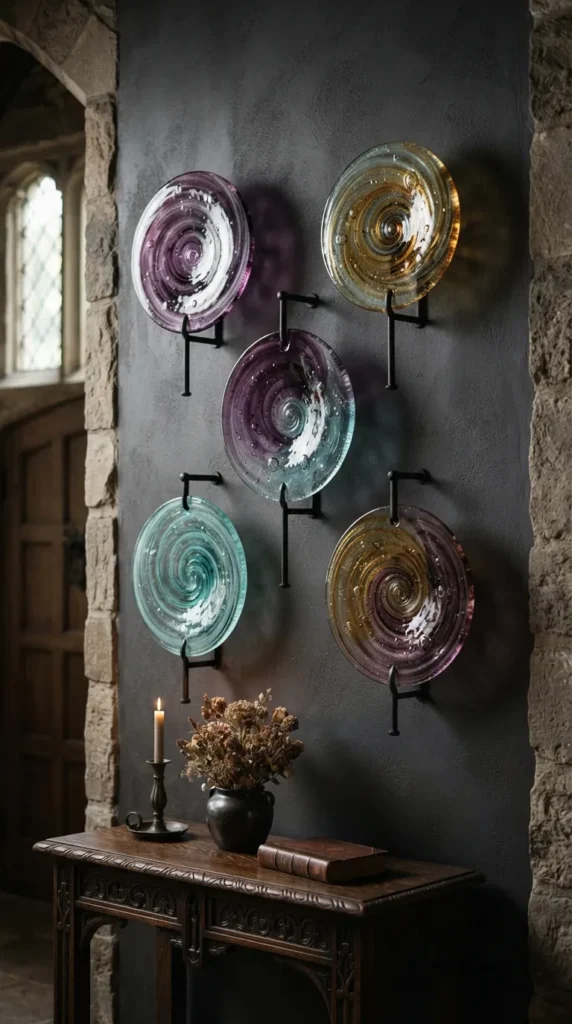
15. Hand-Blown Swirl Glass Rondels
Glass rondels are spun circular discs of blown glass characterized by concentric ridges and a central pontil mark, ideal for window insets or custom wall groupings.
- What This Idea Means: Traditional Venetian spun-glass plates featuring dynamic spiral color blends that transform plain windowpanes into historic art installations.
- How to Make It: In a hot glass studio, gather clear glass onto a blowpipe, add colored glass frits (such as amethyst and gold-topaz), reheat, and blow a small sphere. Open the end of the bubble with tools, transfer the glass to a punty rod, and spin the rod rapidly in front of the glory hole furnace. Centrifugal force flattens the molten bubble into a broad, ridged circular disc. Anneal the disc slowly in a lehr oven, then frame it in round lead came.
- Tips & Variations: Cluster 5 to 9 rondels of varying diameters (from 6 to 14 inches) on a gallery wall using minimal matte black wrought-iron wall brackets.
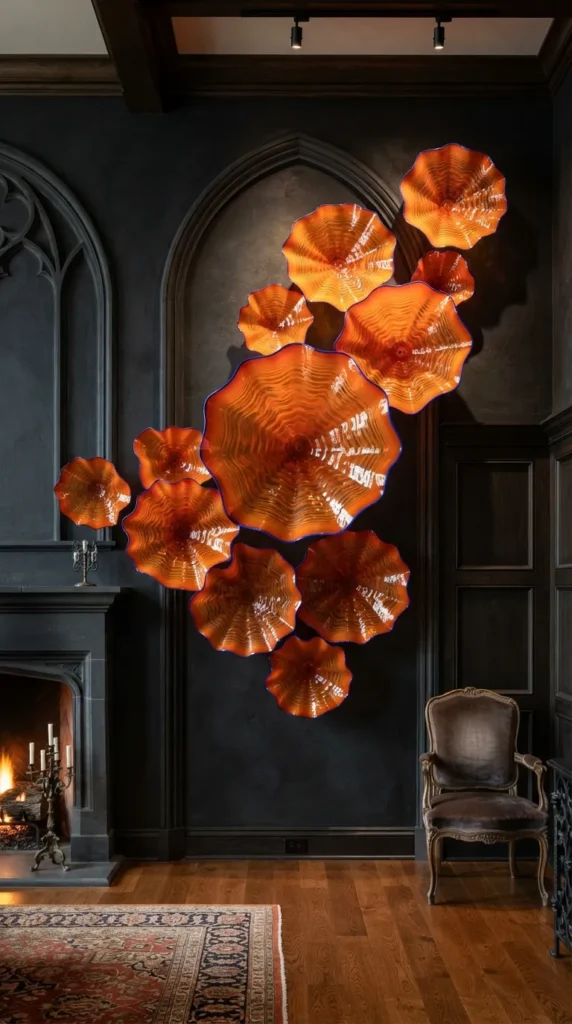
16. Sculptural Chihuly-Style Blown Glass Wall Bowls
Inspired by master glassmaker Dale Chihuly, these broad, undulating glass bowls feature dramatic organic ripples and vibrant color lip-wraps designed for dynamic wall collections.
- What This Idea Means: Large-scale, freeform organic glass bowls mounted directly to walls in flowing, reef-like clusters.
- How to Make It: Gather molten soda-lime glass, color the base with rich transparent pigments (such as fiery persimmon, chartreuse, or deep magenta), and apply a contrasting colored glass thread along the exterior rim (a “lip wrap”). Spin and manipulate the hot glass with rapid, loose movements to coax deep, organic folds into the rim. Anneal thoroughly. Mount the finished vessels to wall studs using specialized industrial mounting hardware with silicone-cushioned standoffs.
- Tips & Variations: Install hidden recessed directional puck lights directly above the installation to project colored light shadows onto the surrounding wall.
17. Stained Glass Monarch Butterfly Transom Panels
Transom panels sit above doorways and window frames, using warm amber, black, and white glass to recreate the iconic patterns of monarch butterfly wings.
- What This Idea Means: A horizontal architectural accent panel celebrating the vibrant geometry of monarch wings, bringing natural warmth into entryways.
- How to Make It: Enlarge a detailed monarch wing illustration to fit a standard 10×30-inch transom frame. Select varying shades of streaky orange, deep cadmium amber, and honey-gold cathedral glass for the wing cells. Cut solid black opalescent glass for the structural wing veins and clean opaque white glass for the border dots. Copper-foil each piece, solder with smooth, rounded beads, and frame the panel in a rigid zinc border for durability.
- Tips & Variations: Add small sections of semi-translucent wispy white cloud glass around the butterfly wings to give the illusion of flight across an open sky.
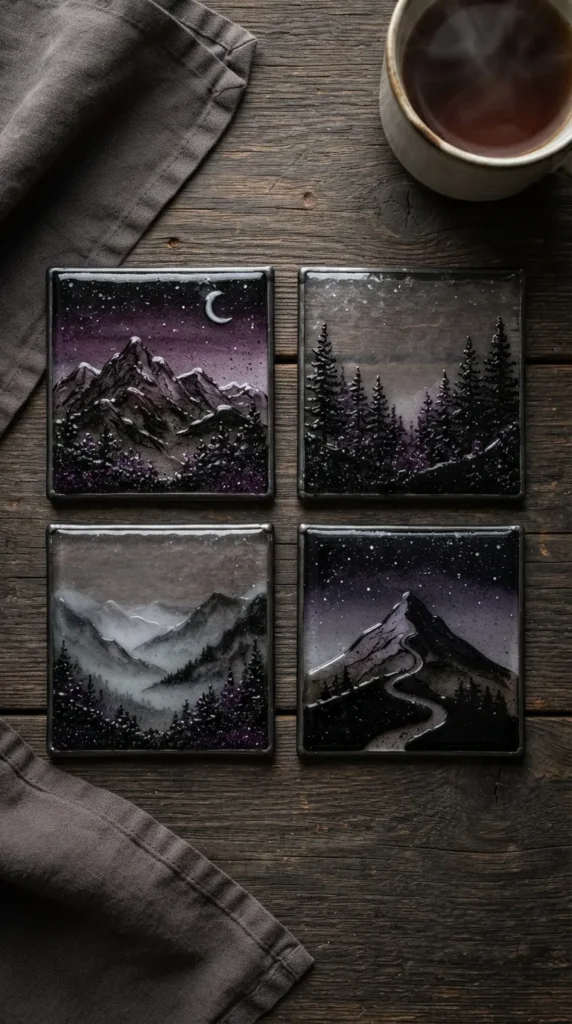
18. Fused Glass Landscape Silhouette Coasters
These square art coasters use crushed glass frits and powders to create serene miniature landscape silhouettes of pine forests, mountain ranges, and twilight skies.
- What This Idea Means: Painterly, kiln-fired glass art where powdered glass replaces traditional oil or watercolor paint to depict peaceful outdoor scenes.
- How to Make It: Use a square of solid white fusible glass as your canvas. Sift fine blue, lavender, and soft pink glass powders across the top half to build a smooth sunset gradient. Use stencils and coarse black glass frit to sculpt crisp mountain peaks and towering evergreen trees across the foreground. Fire to a medium contour fuse (approx. 1400°F) so the scenic details soften into the sky while maintaining subtle textural relief.
- Tips & Variations: Paint fine details—like a tiny flying bird silhouette or a crescent moon—onto the surface using high-fire black glass enamel before the kiln run.
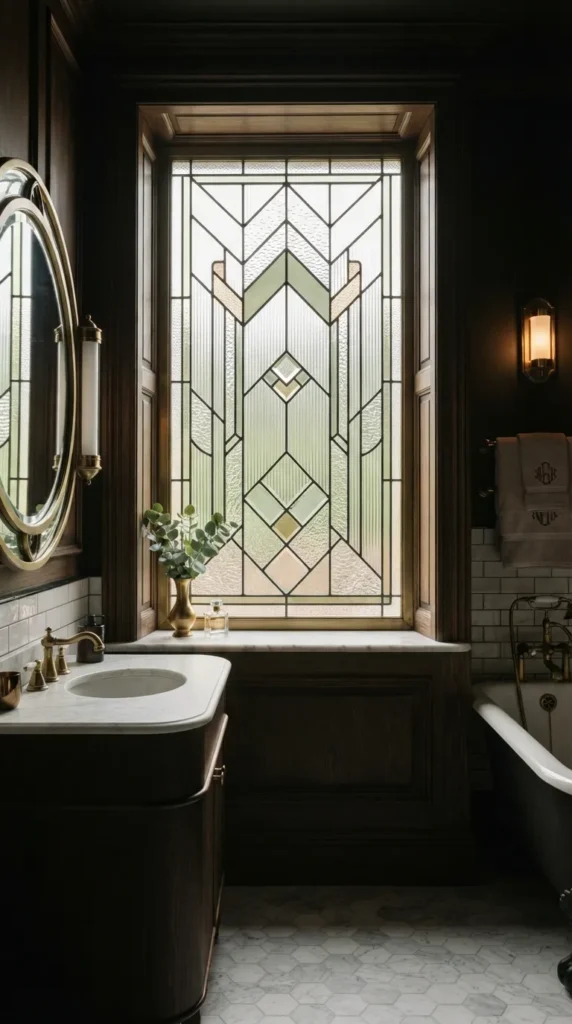
19. Textured Art Deco Reeded Stained Glass Panels
Art Deco glass panels pair crisp geometric chevrons with contrasting glass textures—such as fluted reeded glass, ripple glass, and clear waterglass—framed in soft vintage hues.
- What This Idea Means: A 1920s-inspired decorative panel emphasizing clean symmetry, tactile linear textures, and a muted vintage color palette.
- How to Make It: Draft a classic symmetrical Art Deco pattern featuring stepped chevrons and elongated diamond centers. Cut the geometric center from clear reeded glass, alternating the direction of the ridges (horizontal vs. vertical) between adjacent sections for optical contrast. Border the composition with narrow strips of smoked champagne, dusty rose, and pale olive glass. Assemble with lead came or copper foil, then polish with black patina and carnauba glass wax.
- Tips & Variations: Mount the panel inside a minimal brushed brass frame suspended by a vintage brass link chain for authentic Roaring Twenties character.
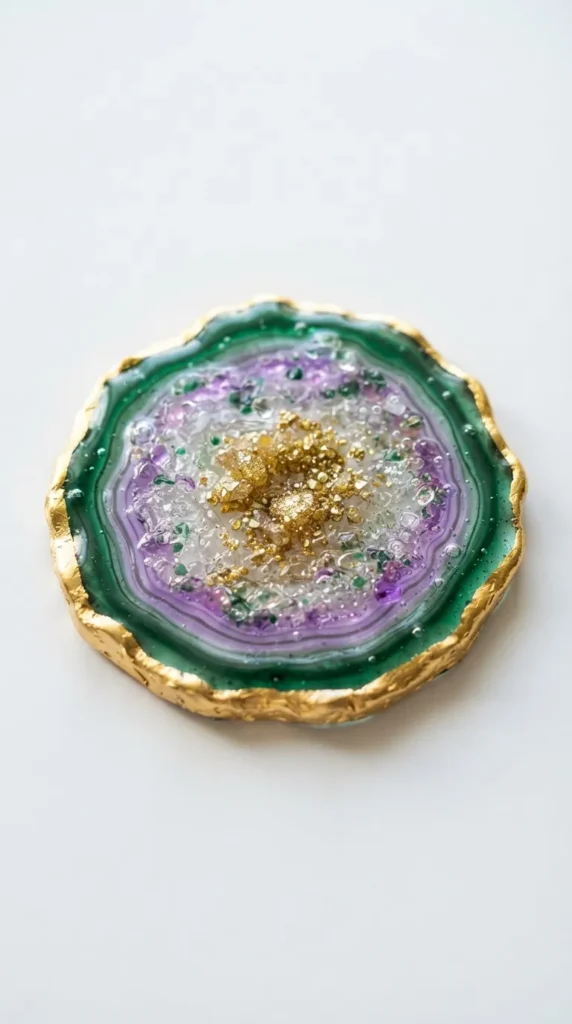
20. Fused Glass Organic Agate Geode Slices
Simulating raw, polished geode slices, these fused glass accents combine concentric bands of colored crushed glass, genuine mineral powders, and glittering mica flakes.
- What This Idea Means: Abstract glass pieces that replicate natural crystal formations, banded agates, and quartz druzy centers using kiln-formed glass materials.
- How to Make It: Trace an organic, irregular geode silhouette onto clear fiber paper lining a kiln shelf. Build concentric rings working from the outside edge inward: start with deep emerald or amethyst glass chunks, move to medium-grain translucent frits, then to pale crystalline frits, leaving a jagged open void in the center. Sprinkle coarse clear sea-salt-sized frit and metallic gold mica powders around the inner edge to create a glittering druzy core. Fire to a full fuse.
- Tips & Variations: Once fired and cooled, paint the rough outer rim with liquid gold leaf or metallic brass enamel paint to complete the look of a sliced raw geode.