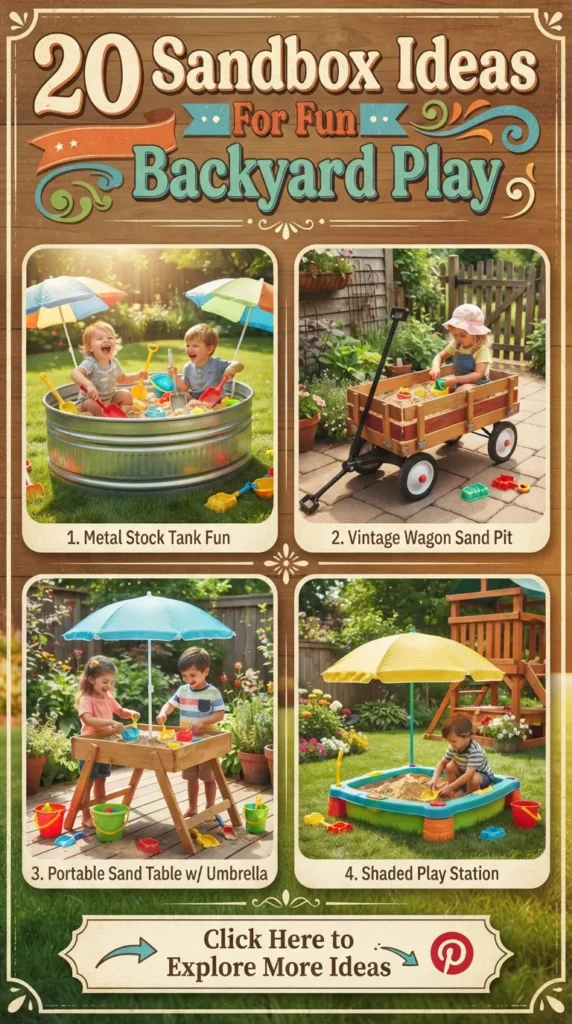
20 Sandbox Ideas For Fun Backyard Play
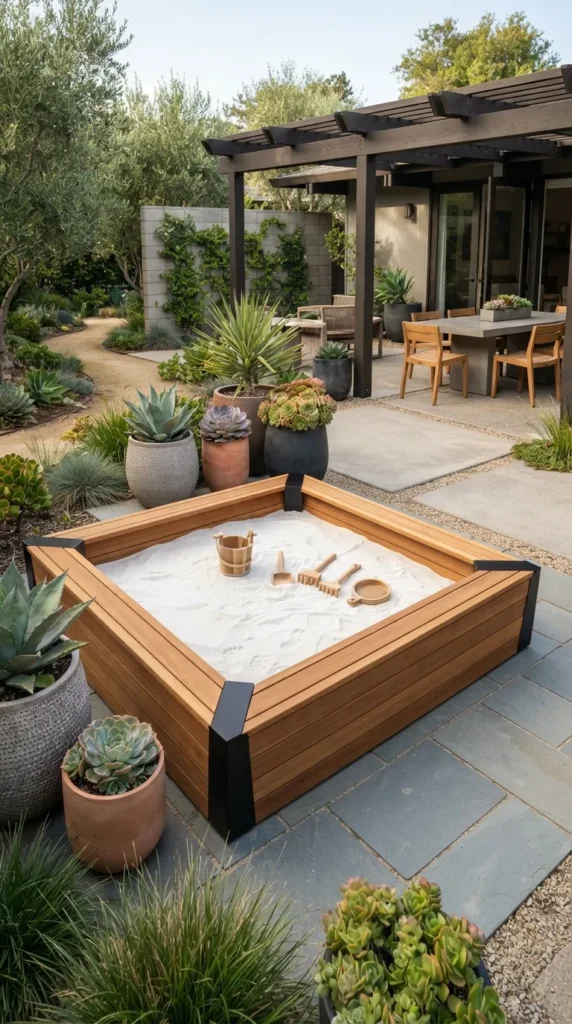
Transforming a backyard into a welcoming play space does not require sacrificing landscape design or visual charm. Modern outdoor play spaces blend organic textures, natural timber, architectural shapes, and smart multi-functional features to create sensory-rich environments that appeal to both children and adults. Sand play supports tactile development, fine motor skills, and open-ended creativity. By tailoring your sandbox design to harmonize with surrounding garden beds, modern patios, and natural turf, you create an outdoor feature that elevates the entire property.
Here is an extensive guide to 20 stunning, practical, and highly aesthetic sandbox designs tailored for backyard family living.
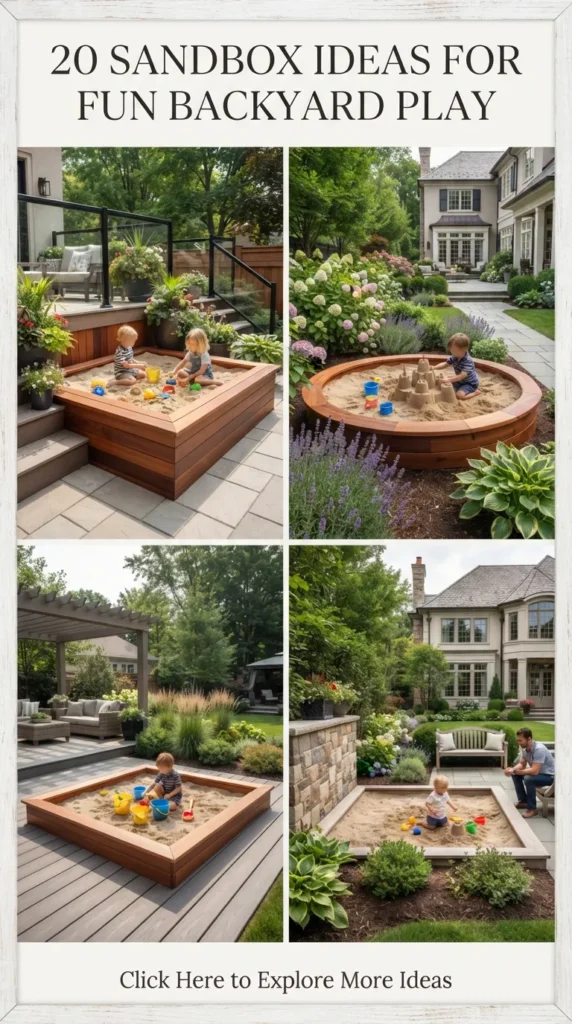
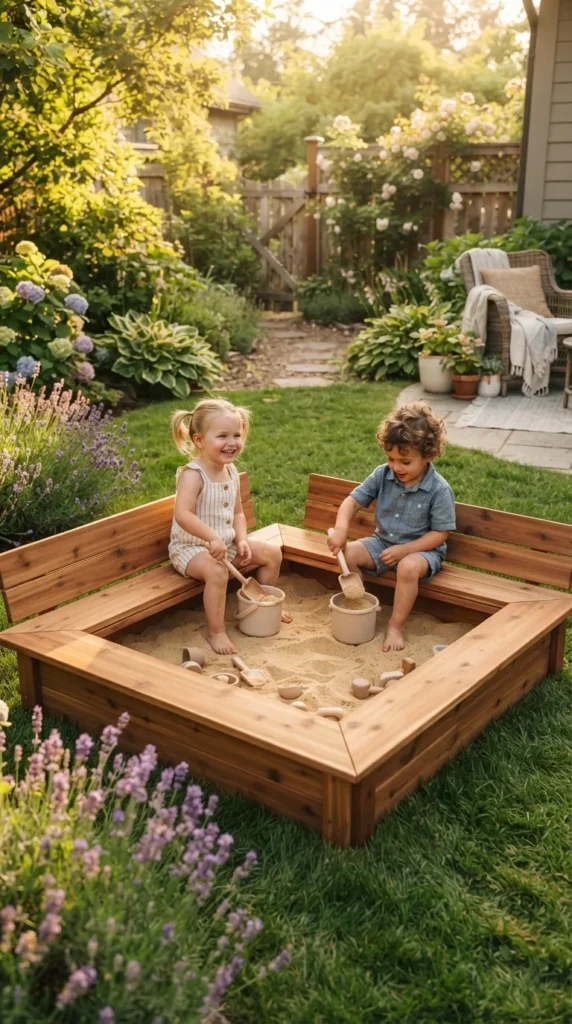
1. Natural Cedar Bench-Surround Sandbox
A polished cedar sandbox featuring wide, smooth perimeter benches offers a clean architectural profile while serving as built-in seating for parents and children alike. Cedar’s warm, golden-amber hue and natural weather resistance make it a premium choice for modern outdoor spaces.
- What This Idea Means: This concept treats the sandbox as permanent patio furniture rather than a temporary plastic toy. Wide edge planks provide comfortable seating, toy display ledges, and a visual boundary that contains sand drift.
- How to Make It: Build a square or rectangular frame using 2×8 smooth-milled cedar lumber. Fasten corner posts inside the perimeter for stability. Top the entire perimeter with 2×6 or 2×8 cedar decking boards, mitering the corners at 45 degrees for a clean joinery finish. Line the bottom with non-woven permeable landscape fabric and fill with washed play sand.
- Tips and Variations: Apply a clear UV-blocking, non-toxic outdoor sealer to preserve the golden tones of the cedar. For a customized look, route the outer corners with a subtle roundover bit to prevent sharp edges.
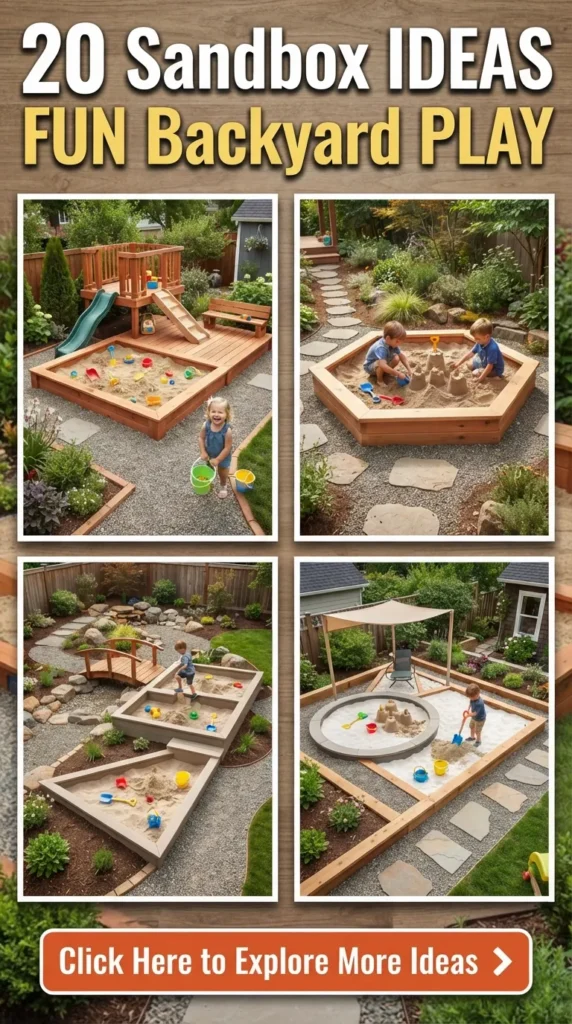
2. Sunken In-Ground Flagstone Sandbox
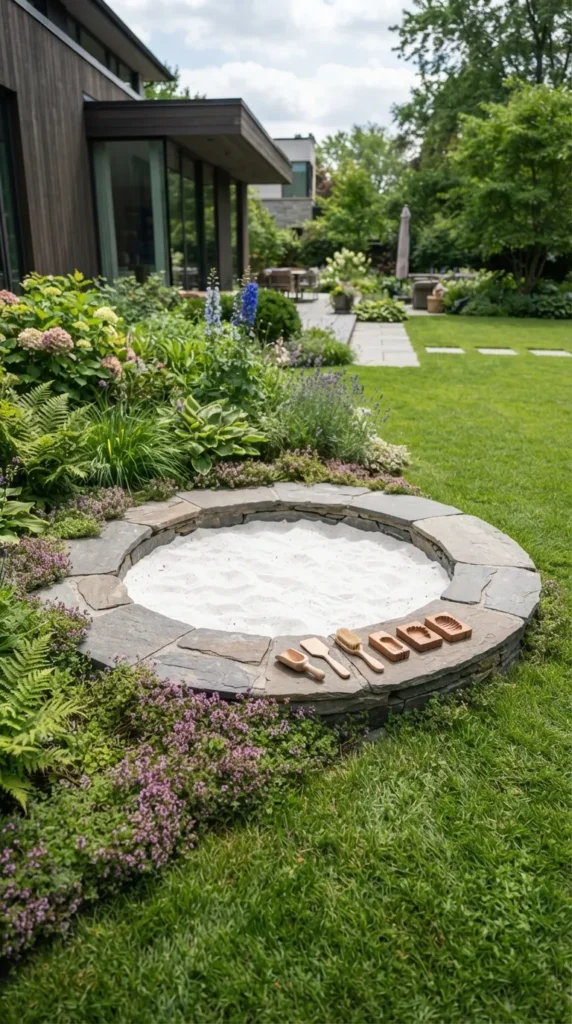
Level with the surrounding lawn or patio, a sunken flagstone sandbox eliminates tall barriers and feels organically integrated into the natural landscape.
- What This Idea Means: Rather than sitting atop the grass, the play area is excavated into the earth, ringed with flat, natural flagstones or slate pavers that double as ground-level pathways.
- How to Make It: Excavate a designated area to a depth of 12 to 16 inches. Install a sturdy treated-wood or polymeric border around the excavation. Lay wide, smooth natural flagstones along the outer edge on a compacted gravel base. Install porous geotextile fabric along the bottom, secure with landscape staples, and fill with fine silica-free sand up to 2 inches below stone level.
- Tips and Variations: Surround the flagstone coping with creeping thyme or soft clover to soften transitions between the grass and stone.
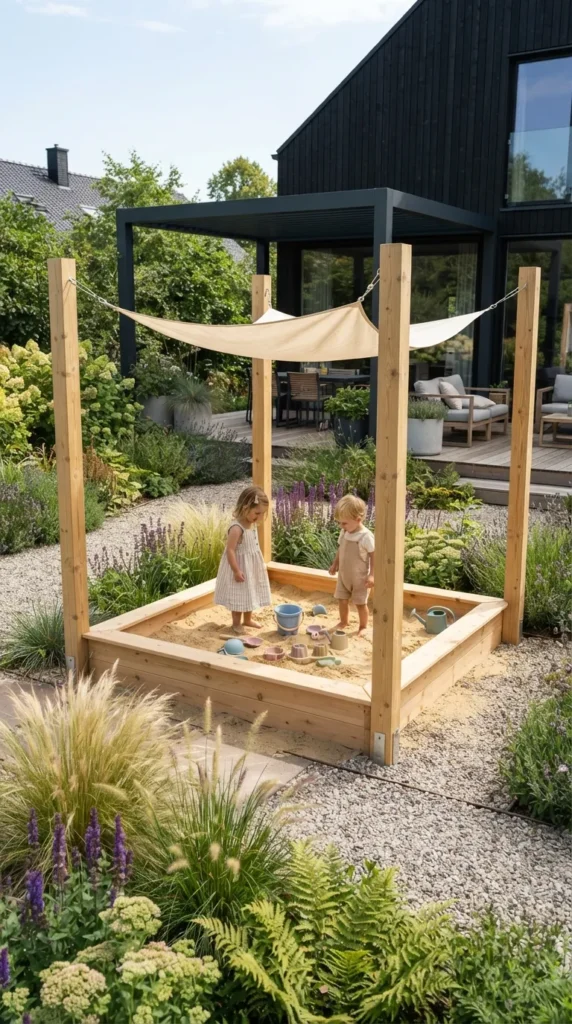
3. Nordic Pine Sandbox with Retractable Canvas Pergola
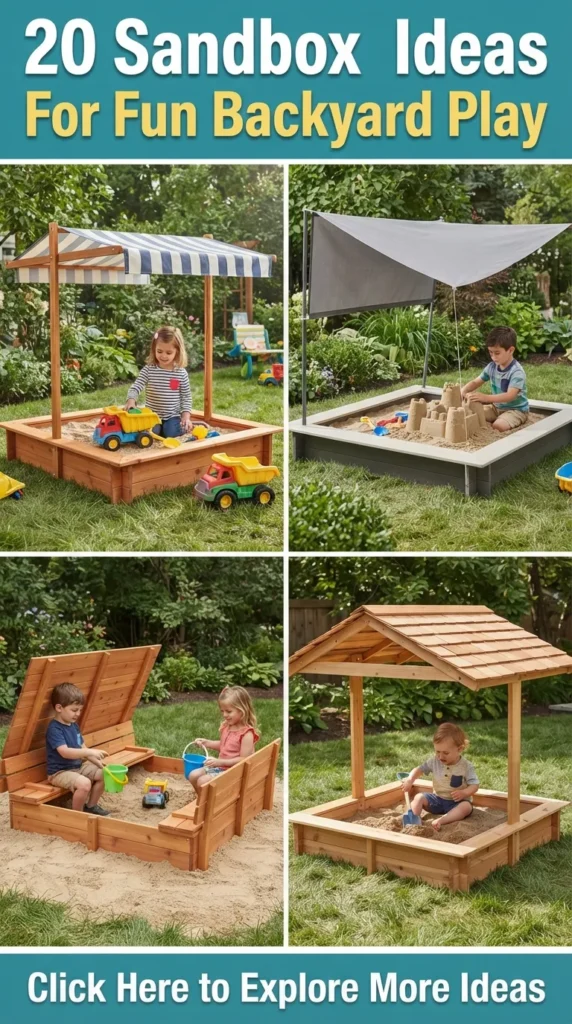
Inspired by Scandinavian design, this minimalist sandbox combines light-toned pine or fir framing with a sliding overhead canvas canopy for modern, sun-safe play.
- What This Idea Means: A marriage of clean geometry and sun protection, this sandbox uses four slim vertical timber posts holding a neutral linen or canvas awning on stainless steel tension wires.
- How to Make It: Assemble an 8×8 foot box using light-toned spruce or pine. Extend four corner posts upwards by 7 feet. String aircraft cable between opposite uprights and hang grommeted outdoor sailcloth on clips, allowing it to slide back and forth depending on sun angles.
- Tips and Variations: Choose water-repellent, cream or off-white canvas. Use brass or marine-grade stainless hardware to enhance the minimalist aesthetic.
4. Vintage Clawfoot Tub Sandbox
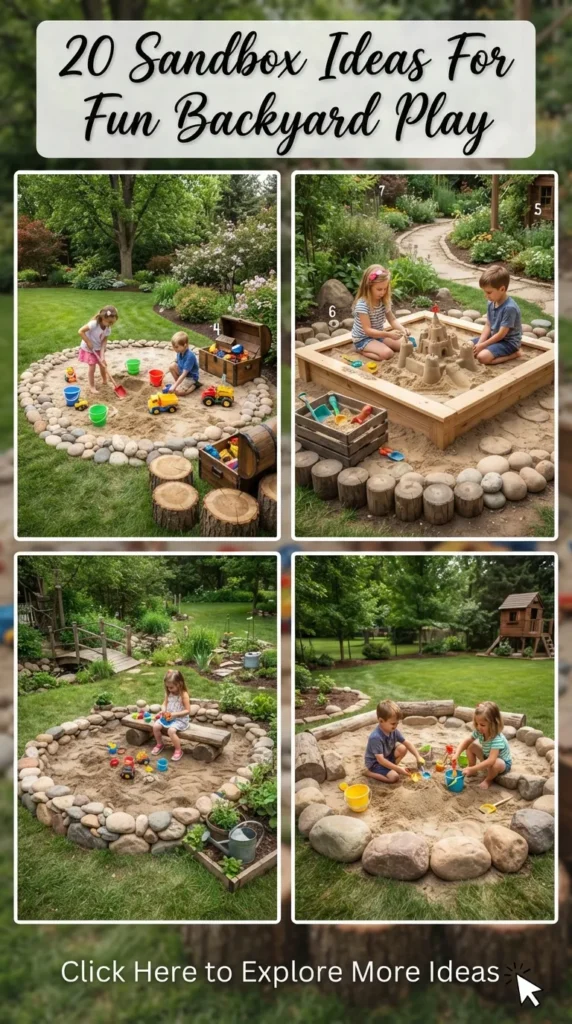
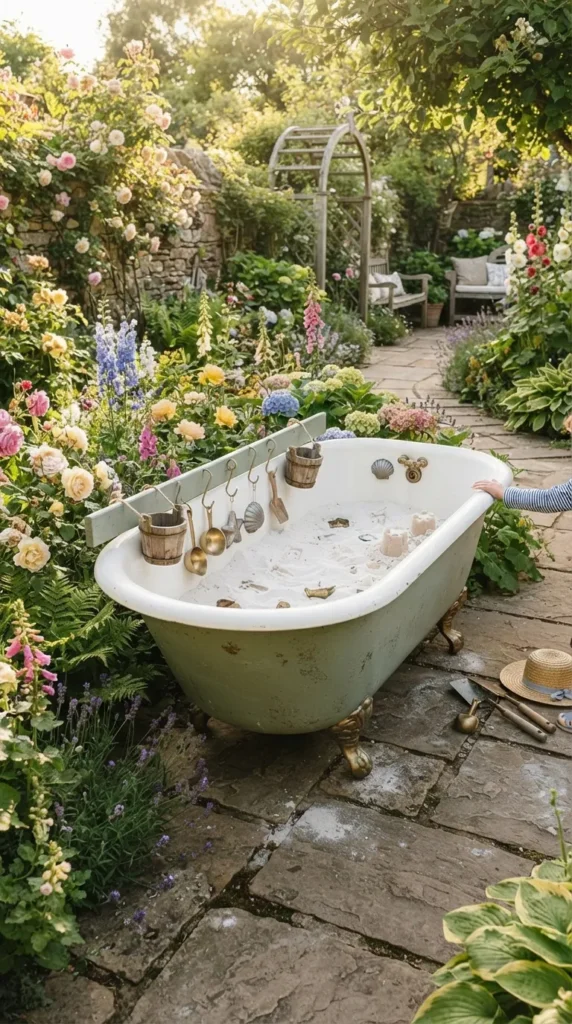
Upcycling a salvaged antique cast iron clawfoot bathtub into an elevated sensory sandbox adds vintage garden character and saves ground space in compact yards.
- What This Idea Means: Repurposing architectural salvage into a contained, raised sandbox that keeps play at waist height, making it ideal for toddlers, patios, and small urban gardens.
- How to Make It: Securely mount an antique clawfoot tub onto level paving stones or a deck. Ensure the drainage hole is clear and covered with fine wire mesh and landscape fabric. Fill with white sand and hang galvanized mini buckets and wooden scoops along the rolled porcelain edge.
- Tips and Variations: Paint the exterior cast iron shell with sage green, matte black, or terracotta exterior enamel, leaving the white enamel interior gleaming.
5. Organic Driftwood and Tree Trunk Log Sandbox
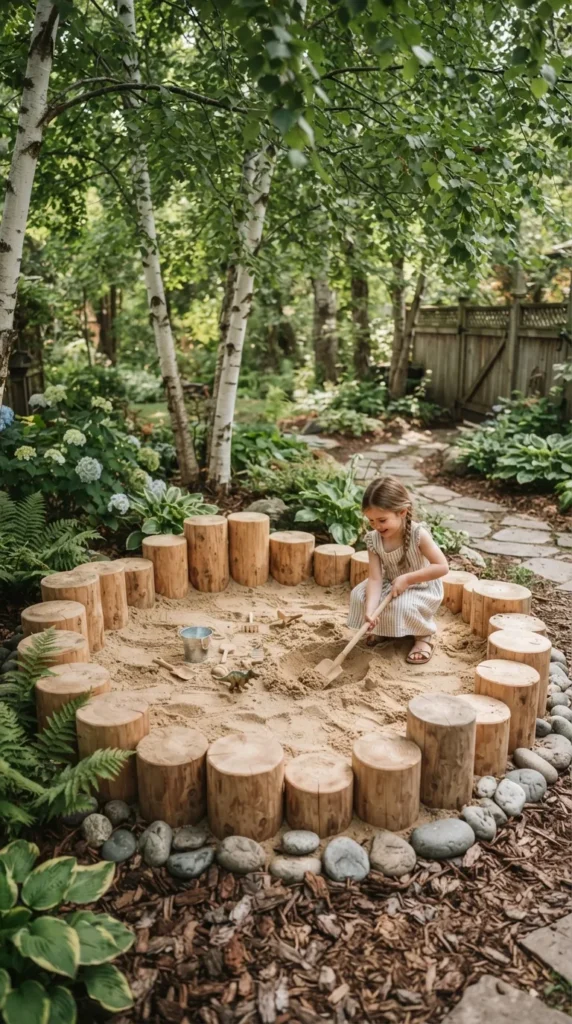
A rustic, forest-inspired sandbox built using cut timber logs, smooth tree rounds, and natural driftwood pieces creates an organic play zone that blends into woodland gardens.
- What This Idea Means: A nature-first approach that uses whole tree logs of varying heights to form the retaining wall, doubling as stepping logs and balance beams.
- How to Make It: Source debarked, cured logs (such as cedar, juniper, or pine) cut to 12 to 18-inch lengths. Dig a shallow trench in a circular or freeform layout. Stand the logs vertically or lay them horizontally, anchoring them together with structural timber screws or rebar driven through pre-drilled holes into the ground.
- Tips and Variations: Sand log tops silky smooth to prevent splinters. Intersperse log rounds with smooth river rocks along the perimeter.
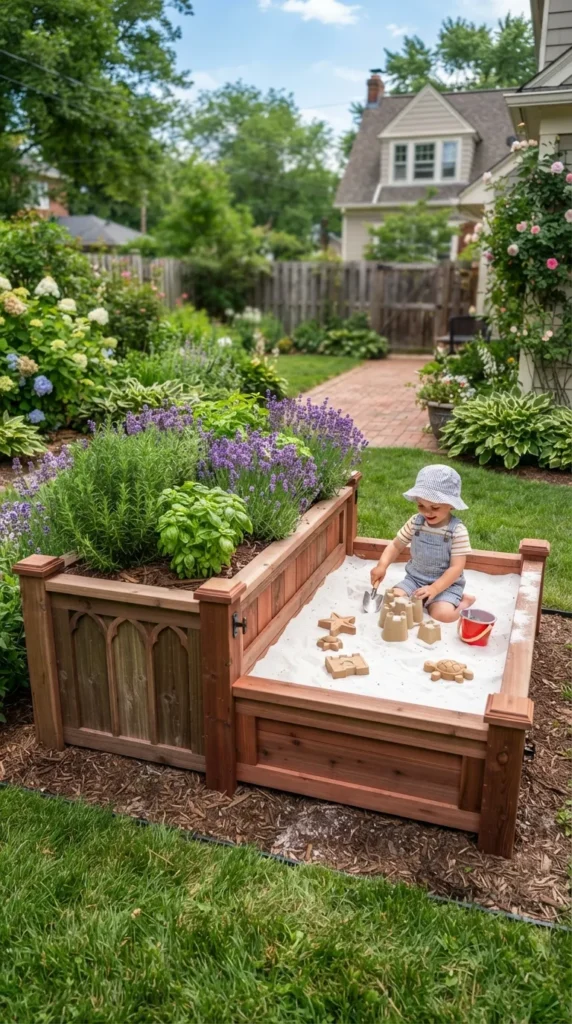
6. Integrated Raised Garden Bed and Sandbox Combo
A unified wooden installation that pairs an elevated planter bed overflowing with lush greenery and child-friendly herbs right beside a connected sandbox.
- What This Idea Means: Merging edible gardening and play into a single structural box, creating sensory interaction where children play amid the scents of rosemary, lavender, and sweet mint.
- How to Make It: Construct a long divided wooden planter box (for example, 4×10 feet). Allocate 6 feet for the sand zone and 4 feet for the planting section with a solid interior divider wall. Fill the planter side with organic potting soil and the sandbox side with white play sand.
- Tips and Variations: Plant hardy, tactile herbs like woolly thyme, dwarf lavender, and scented geraniums along the divider so sweet aromas surround the sand play.
7. Geometric Hexagon Sandbox with Wood Slat Fold-Out Lid
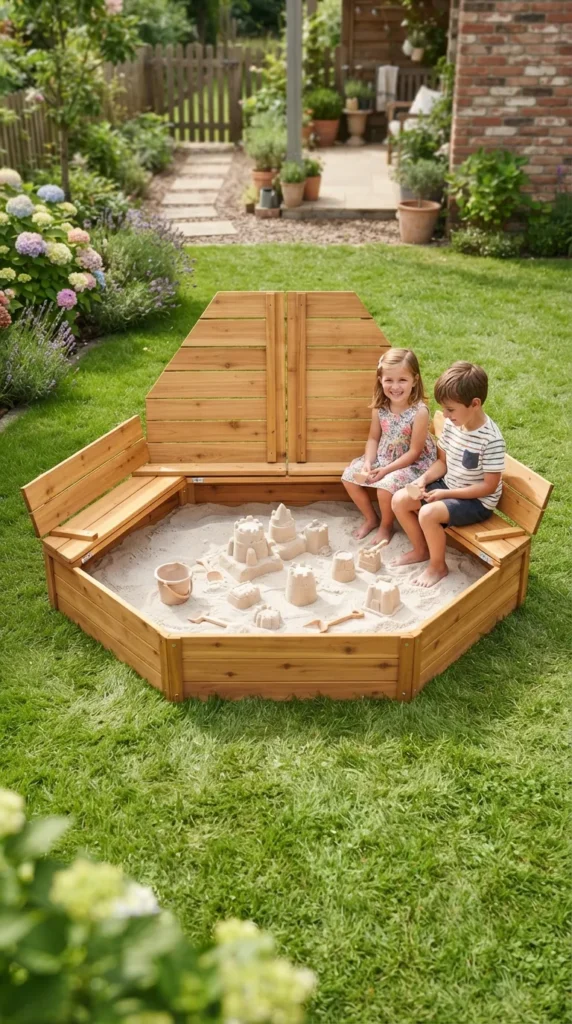
A striking honeycomb hexagon shape built from rich hardwood slats, engineered with a lid that unfolds into dual bench seats on opposite sides.
- What This Idea Means: A sculptural, geometric centerpiece that looks intentional and clean when closed, yet opens effortlessly into full play seating.
- How to Make It: Cut six equal lengths of 2×8 timber at 30-degree bevels to assemble a symmetrical hexagon. Frame a multi-paneled slatted lid using outdoor piano hinges that fold backward to create two supported bench seats when opened.
- Tips and Variations: Treat the wood with teak oil or a warm walnut stain. Add marine-grade rope handles for easy folding.
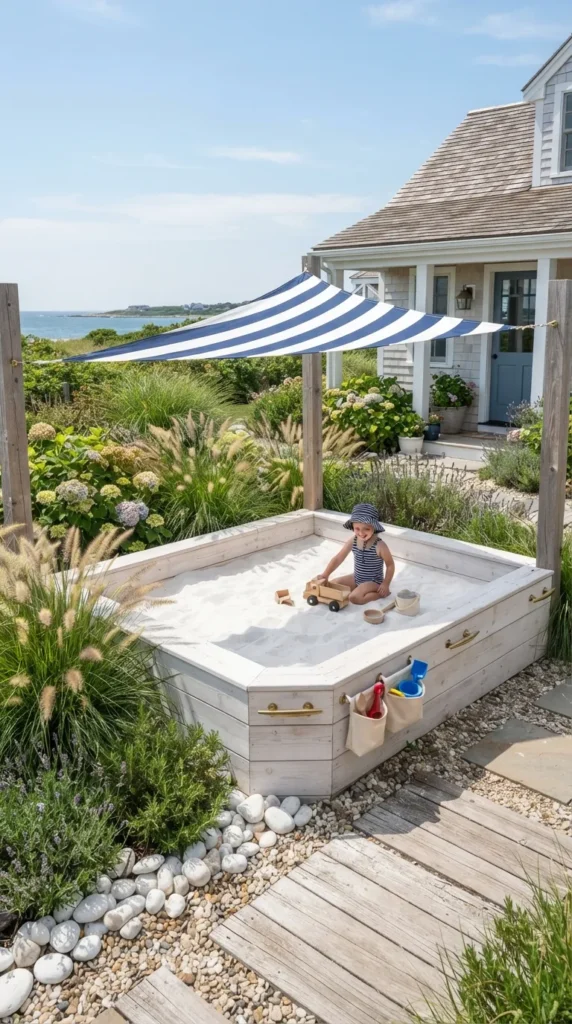
8. Coastal White-Washed Shiplap Sandbox with Sail Canopy
Bringing the coast directly to your garden, this sandbox features crisp white-washed shiplap exterior walls, bright white quartz sand, and a triangular nautical sun sail overhead.
- What This Idea Means: A breezy, resort-style aesthetic that mimics a private beach cabana with crisp horizontal paneling and bright reflective sand.
- How to Make It: Frame a 6×6 foot box with structural treated pine, then clad the exterior faces with horizontal shiplap siding. Paint with an exterior-grade chalky white wash. Anchor a triangular neutral sail shade between three surrounding trees, posts, or nearby exterior walls.
- Tips and Variations: Add brass dock cleats on the sides to hang miniature woven baskets and small wooden shovels.
9. Modern Concrete Border Sunken Sandbox
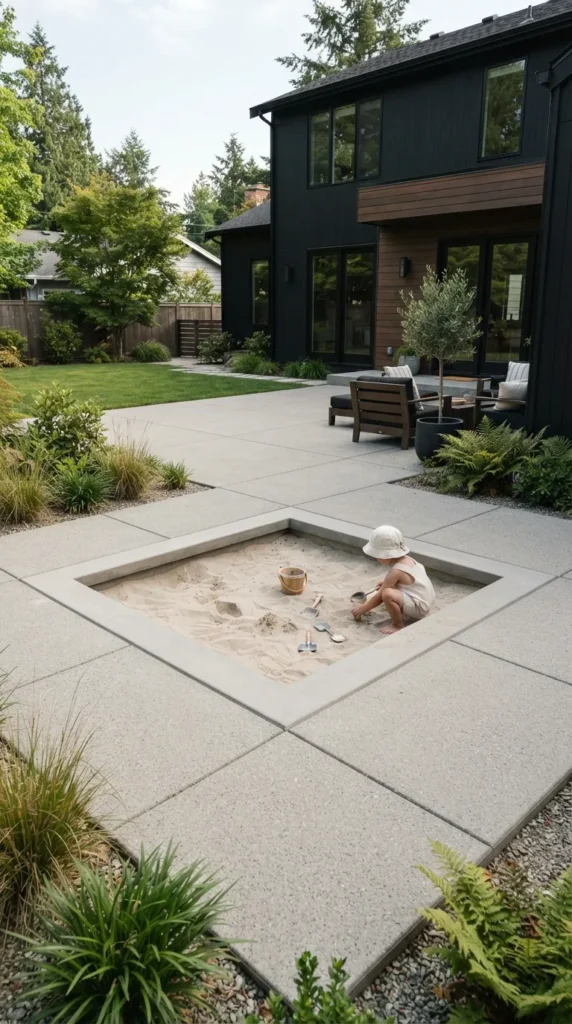
A sleek, architectural sandbox flush-mounted in a poured concrete patio or framed by smooth pre-cast concrete coping for ultra-modern residential yards.
- What This Idea Means: A minimalist design choice that treats sand play as an intentional negative-space cutout within a stone or concrete patio slab.
- How to Make It: Form out an excavated square or circle in the patio zone prior to pouring concrete, or cut into an existing paver pad. Line the interior walls with waterproof barrier boards and smooth concrete edging. Ensure gravel base drainage underneath the fabric floor before filling with play sand.
- Tips and Variations: Keep the sand level 3 inches below the top concrete curb to keep blown sand confined to the pit.
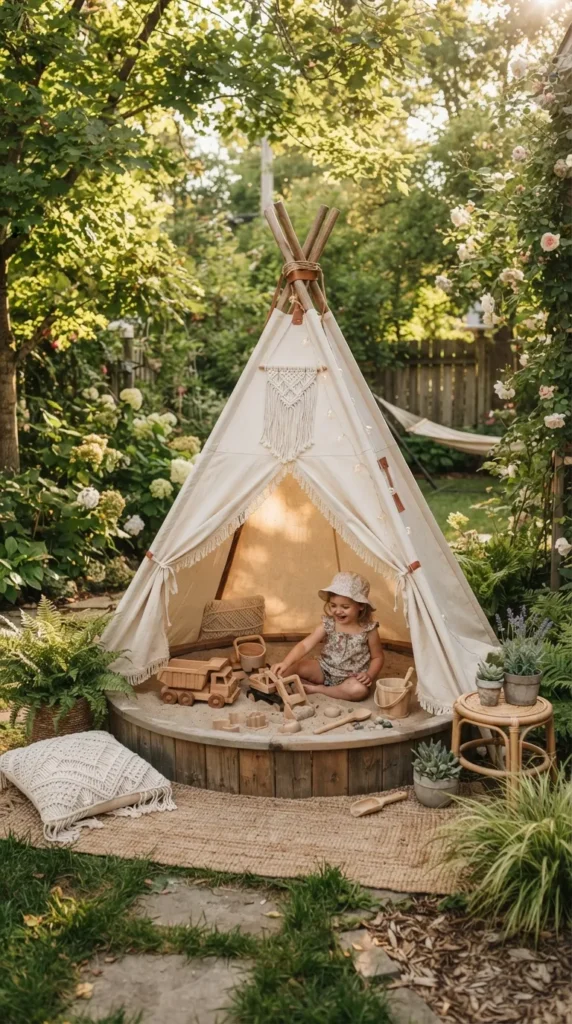
10. Boho Chic Canvas Teepee Sand Play Zone
A canvas tent frame mounted directly over a natural circular wooden sandbox, creating a cozy shaded desert oasis filled with neutral sensory toys.
- What This Idea Means: A cozy hideaway that pairs the imaginative enclosure of a teepee with a full sandbox floor, perfect for calm, focused tactile play.
- How to Make It: Build an octagon or circle sandbox base using smooth birch or fir planks. Secure five tall, smooth bamboo or spruce poles together at the top with natural rope, anchoring their bases firmly inside the sandbox corners. Drape unbleached cotton duck canvas over the frame, tying it back with leather cords.
- Tips and Variations: Incorporate solar-powered fairy lights securely along the upper teepee frame for magical evening playtime.
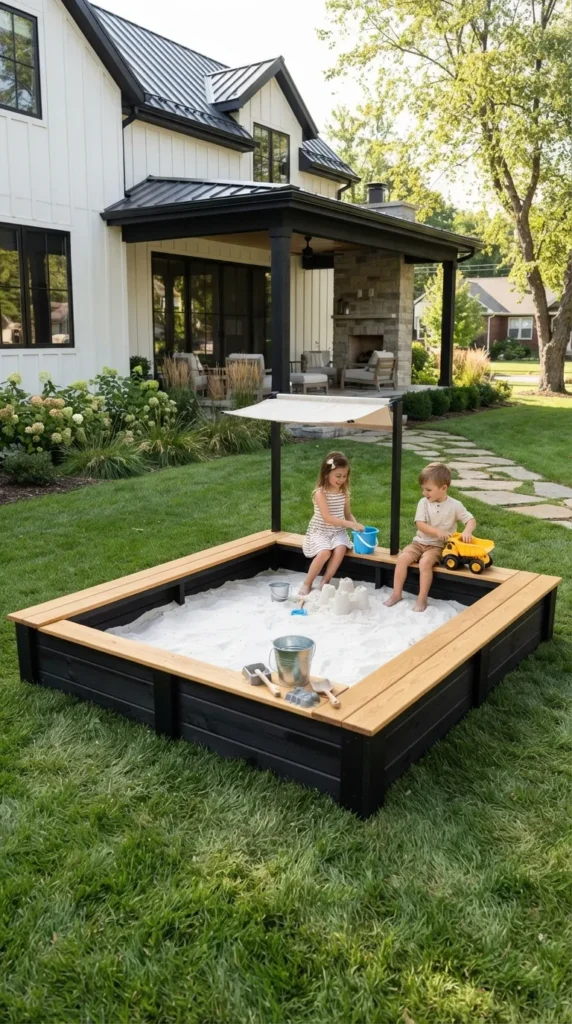
11. Minimalist Black Modern Farmhouse Sandbox
Featuring a bold matte black timber exterior paired with natural unstained wood seating trim and brilliant white play sand, this sandbox mirrors modern farmhouse architecture.
- What This Idea Means: High-contrast contemporary styling that blends harmoniously alongside homes with dark trim, black board-and-batten siding, or modern steel pergolas.
- How to Make It: Build a deep square timber box using treated lumber. Sand smooth and paint the exterior panels with an exterior matte black satin stain. Top the upper rim with clear-sealed golden natural pine or white oak planks for contrasting rim seating.
- Tips and Variations: Use clean, sparkling white sand to maximize the dramatic monochrome contrast against the deep black frame.
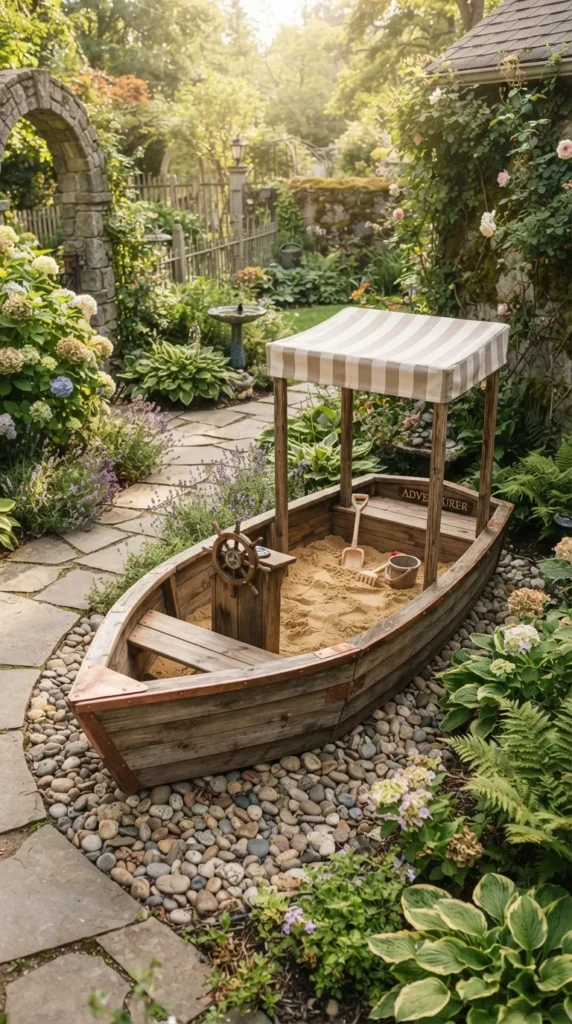
12. Boat-Shaped Maritime Play Pit
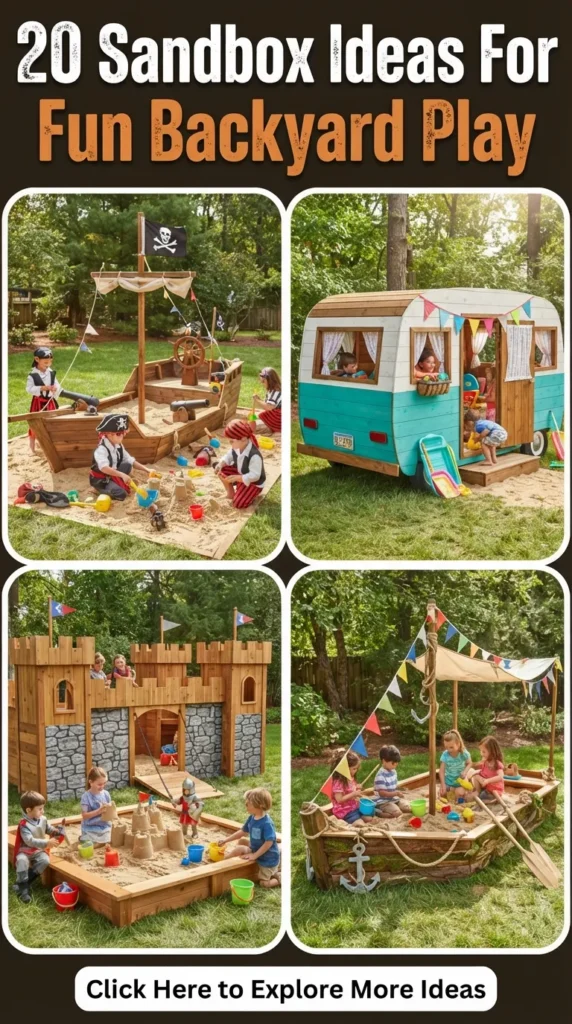
A custom-crafted wooden vessel sandbox shaped like a small skiff or rowboat, complete with a mini bow seat, steering wheel, and canvas deck shade.
- What This Idea Means: A sandbox designed as an interactive nautical play element that fuels open-ended imaginative play while looking charming in the garden.
- How to Make It: Construct a pointed bow frame transitioning into a rectangular aft hull using bendable cedar or marine plywood. Install bench seats across the transom and the bow. Mount a small wooden ship wheel on a center upright and fill the main hull cavity with sand.
- Tips and Variations: Finish in two-tone navy blue and natural wood, with sisal rope accents wrapped neatly along the perimeter gunwales.
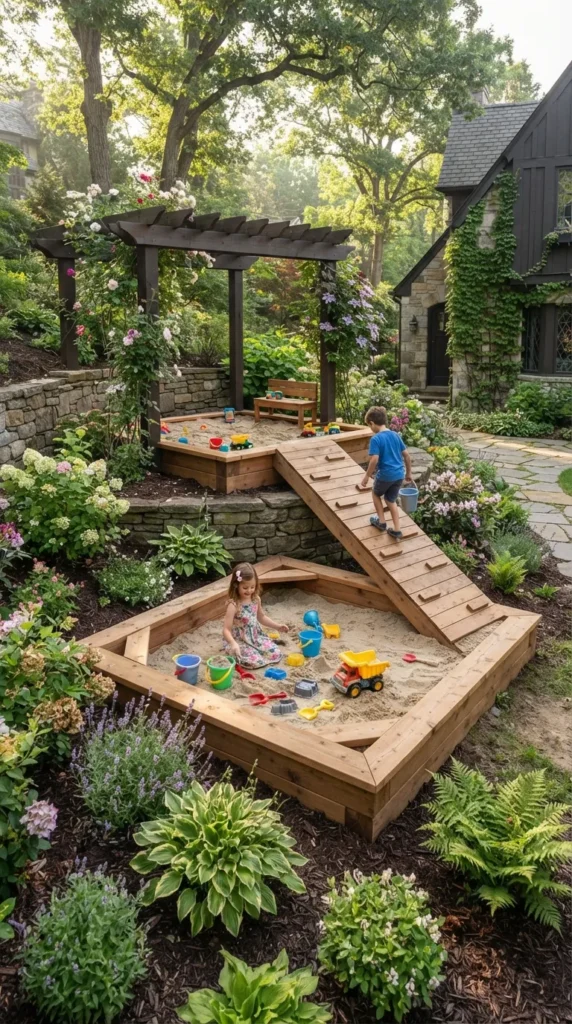
13. Dual-Level Step-Down Tiered Sandbox
A stepped sandbox featuring two interconnected levels of sand at different heights, providing natural terracing for sloped backyards.
- What This Idea Means: Utilizing changes in elevation to create multi-tiered play zones, allowing children to move sand between upper and lower terraces.
- How to Make It: Build two adjoining timber frames where one box is set 8 inches higher than the other. Create an integrated wooden ramp or wide mid-level wooden bench that bridges the two levels, allowing sand to be dumped or rolled between tiers.
- Tips and Variations: Add a small built-in wooden slide or sand-chute funnel connecting the upper deck to the lower sand pit.
14. Mid-Century Modern Angled Hairpin Sandbox
An elevated or ground-level sandbox characterized by clean asymmetric angles, sloped wood benches, and mid-century aesthetic cues.
- What This Idea Means: A retro-modern sandbox designed with clean angular lines, warm teak tones, and stylized angled corner bracing that matches mid-century outdoor furniture.
- How to Make It: Build a trapezoidal or rhomboid timber box instead of a standard rectangle. Use horizontal slatted ipe, teak, or stained cedar. Add slim, heavy-duty powder-coated steel brackets or decorative angular bench supports on two sides.
- Tips and Variations: Pair with minimalist matte-glazed ceramic plant pots containing ornamental grasses around the sandbox perimeter.
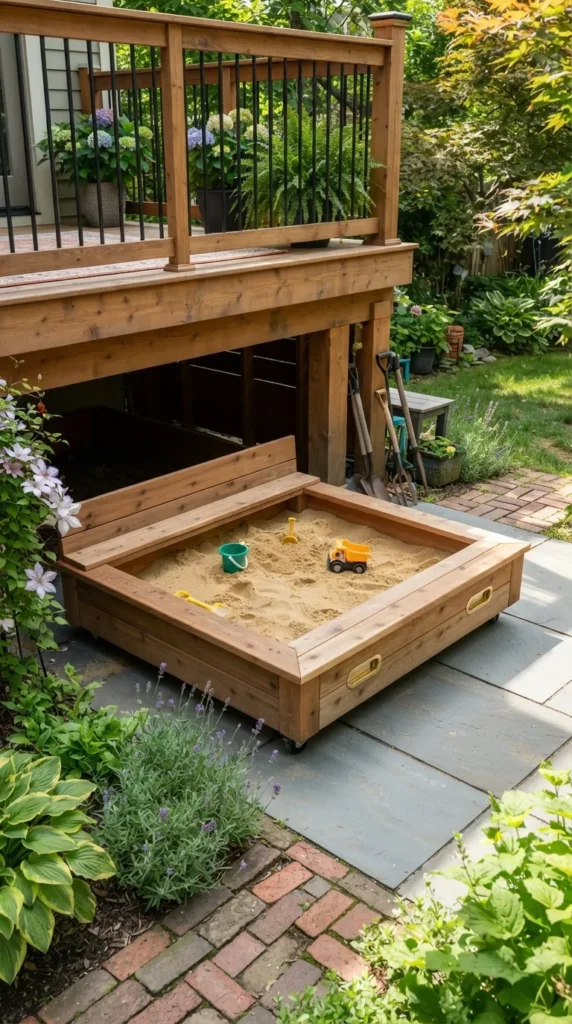
15. The Hidden Under-Deck Rollout Sandbox
A space-saving sandbox built onto heavy-duty caster wheels that slides completely beneath a raised back deck or patio bench when not in use.
- What This Idea Means: The ideal solution for compact backyards, protecting the sand from weather and pets by tucking it away neatly beneath existing deck structures.
- How to Make It: Build a low-profile 4×6 foot wooden platform box using reinforced 2×6 timber. Attach 6 to 8 industrial-grade rubber caster wheels rated for heavy weight to the underside. Add a fitted marine-plywood top cover with flush pull rings and slide the entire unit under the deck frame.
- Tips and Variations: Install a latching weather-seal on the leading face that blends with your deck skirting for an invisible finish when stowed.
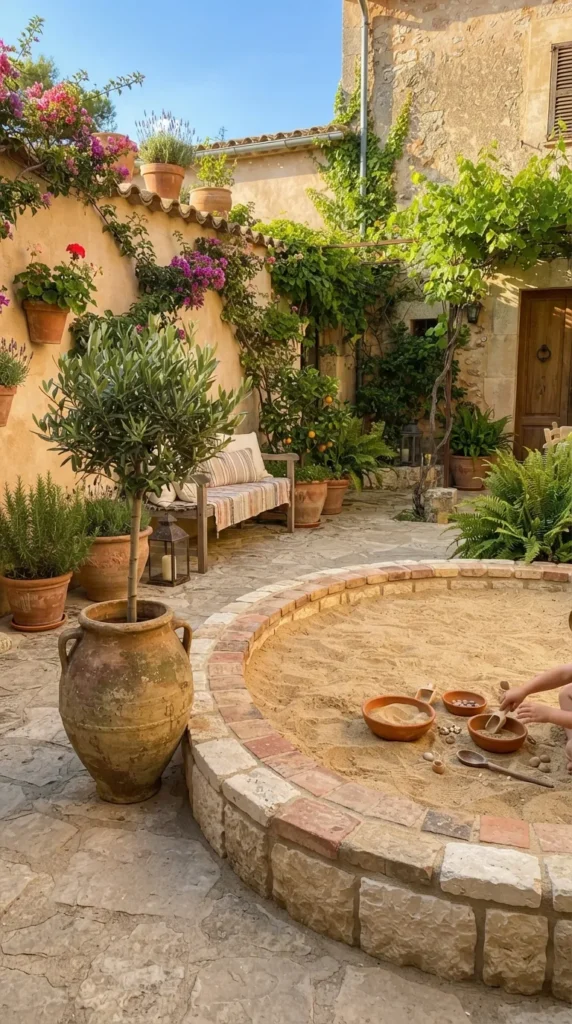
16. Mediterranean Terracotta & Olive Tree Sand Corner
A Mediterranean garden-inspired sand court bordered by stacked terracotta bricks, light limestone gravel paths, and potted dwarf olive trees.
- What This Idea Means: A warm, earthy sandbox theme using sun-baked terracotta clay edging and golden sand to evoke a European courtyard garden.
- How to Make It: Create a curved garden nook using double-stacked terracotta retaining bricks or rustic limestone blocks dry-stacked and mortared on a sand base. Fill the center zone with fine golden sand and arrange oversized terracotta planters nearby.
- Tips and Variations: Incorporate smooth terracotta bowls and wooden scoops as aesthetic, open-ended sensory sand toys.
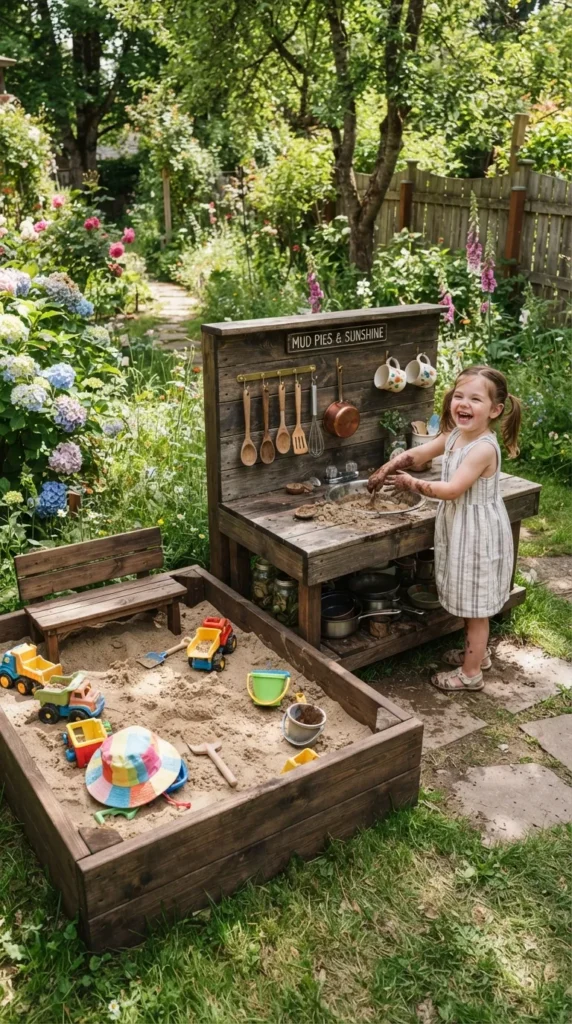
17. Multi-Bin Wooden Mud Kitchen & Sand Hub
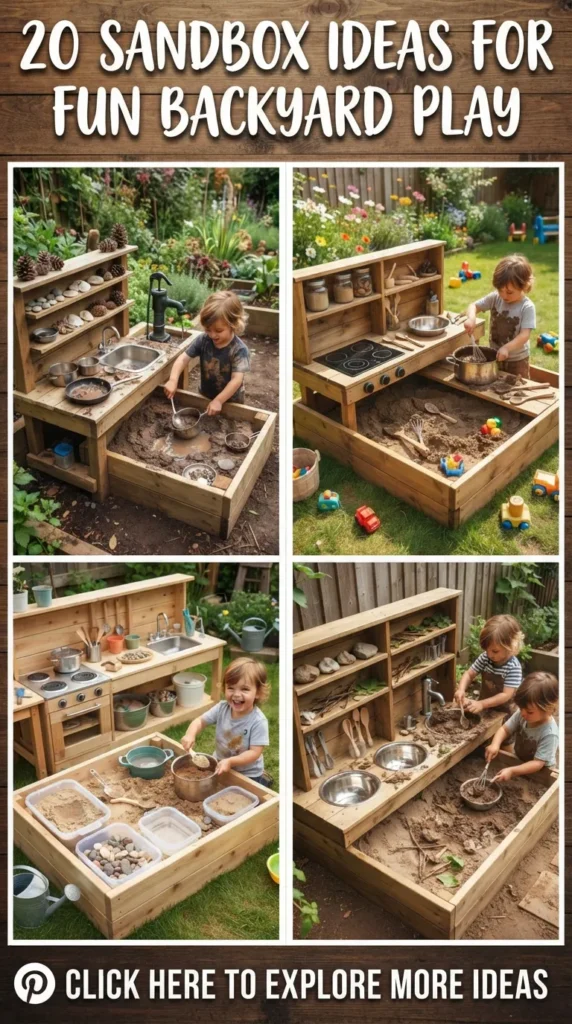
A comprehensive outdoor sensory station featuring a sandbox combined with an attached wooden mud kitchen, including timber countertops, sunken stainless bowls, and accessory hooks.
- What This Idea Means: Combines loose sand play with water and mixing stations, keeping creative mess confined to a dedicated play structure.
- How to Make It: Build a standard rectangular sandbox. Along one side, erect a vertical timber slat backboard holding a solid wood play counter. Cut circular recesses into the counter to drop in stainless steel mixing bowls as faux sinks, and install brass utility hooks for hanging copper whisks and wooden spoons.
- Tips and Variations: Add a small manual water pump or a food-safe beverage dispenser nearby to supply controlled water for making wet sandcastles.
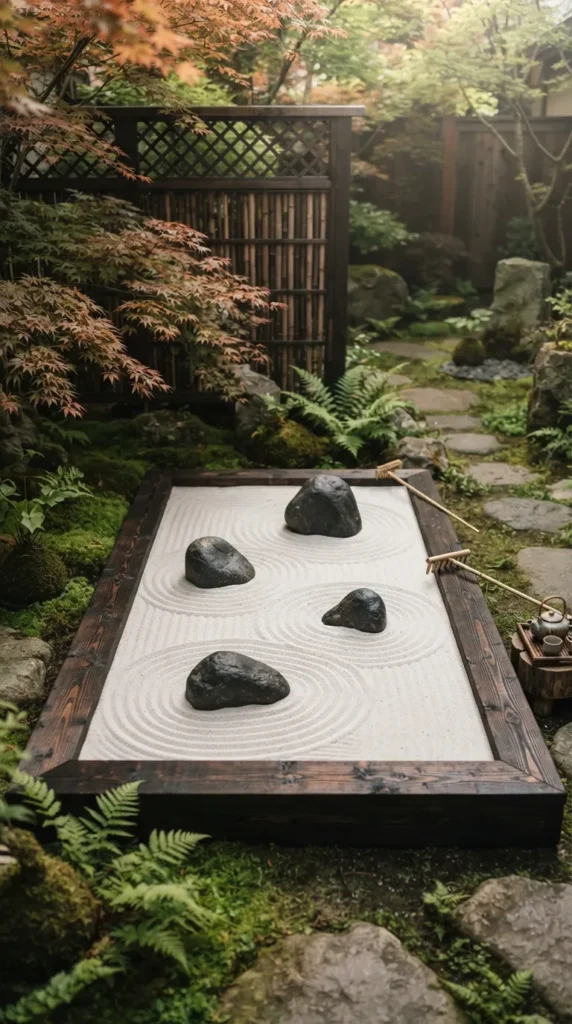
18. Japanese Zen Garden-Inspired Sandbox
A tranquil, serene sand play space featuring dark yakisugi (charred timber) framing, light silica sand, and miniature wooden rakes.
- What This Idea Means: Translates the aesthetic of a Japanese dry landscape garden into a meditative sand area where children and adults can rake patterns, arrange stones, and play creatively.
- How to Make It: Use Shou Sugi Ban (charred and oiled wood) to build a low-profile, clean square border. Fill with fine, pale quartz sand and place several large, smooth river boulders in artistic groupings within the pit.
- Tips and Variations: Supply child-sized wide-tooth wooden rakes and smooth granite stones to encourage pattern drawing and mindful play.
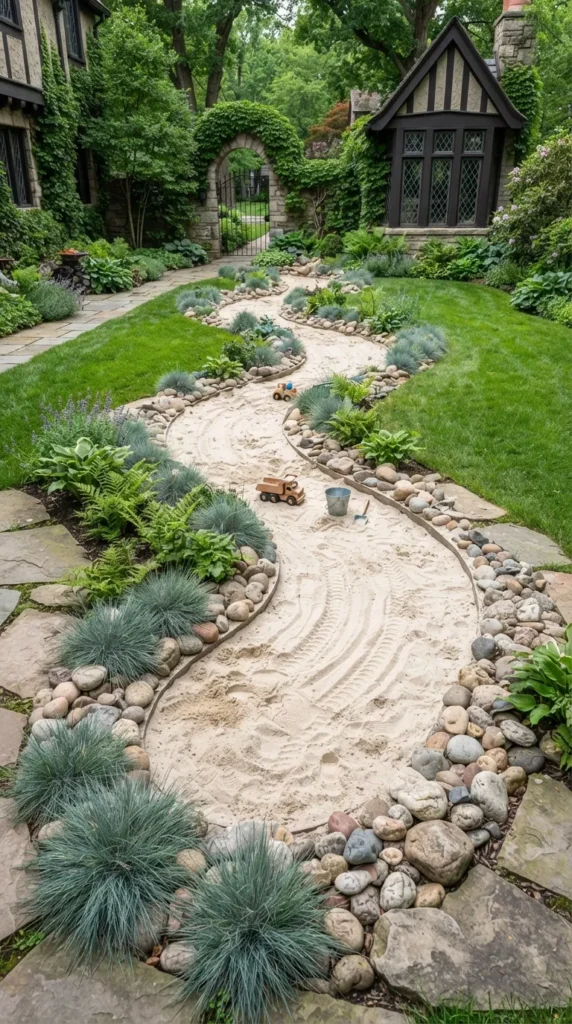
19. Curved Riverbed Sand Basin with Pebble Run
An organic, curved sandbox that winds through the lawn like a dry creek bed, bordered by smooth river cobblestones and native grasses.
- What This Idea Means: Ditching straight lines for sweeping, curved contours that mimic a natural stream bed, turning the play zone into an ornamental landscaping feature.
- How to Make It: Lay out a gentle serpentine shape using garden hoses as templates. Excavate the curve 12 inches deep. Line the trench with heavy weed barrier. Border both sides with a mix of smooth Mexican river rocks, granite boulders, and flagstones, then fill the center channel with play sand.
- Tips and Variations: Plant hardy ornamental grasses such as blue fescue, switchgrass, or fountain grass along the stone edges to complete the riverbed look.
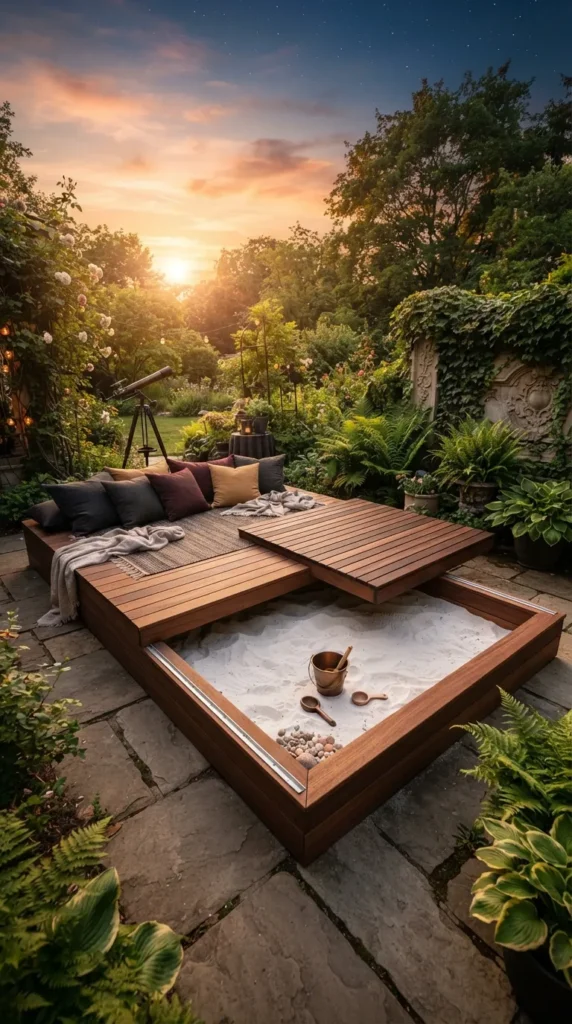
20. Stargazer’s Sandbox with Sliding Stargazing Deck
A large timber sandbox featuring a sliding wood-slat sun deck on tracks that completely rolls over the sandbox to protect it, transforming the top into a lounge platform.
- What This Idea Means: A luxurious dual-purpose garden feature: a fully protected sand pit by day, and an elevated wooden daybed or stargazing platform when closed.
- How to Make It: Construct a sunken or ground-level cedar sandbox. Mount flat steel track rails along two sides. Build a robust, low-profile slatted wooden deck panel fitted with inverted v-groove wheels that roll over the rails, covering the sand completely when closed.
- Tips and Variations: Style the top sliding platform with weatherproof outdoor floor cushions and throw pillows for comfortable evening lounging.
Essential Sandbox Maintenance and Safety Tips
To keep your bespoke sandbox clean, aesthetic, and welcoming season after season, follow these practical maintenance guidelines:
- Always Use Washed Play Sand: Never use builder’s or construction sand, which can contain fine crystalline silica dust, sharp particles, and clay minerals that stain clothes. Look for washed, screened natural silica-free play sand.
- Install Proper Drainage: Always line the earth bottom with water-permeable non-woven landscape geotextile fabric. Avoid using solid plastic tarps at the base, which trap standing rainwater and lead to stagnant moisture.
- Keep It Covered When Inactive: An aesthetically pleasing lid, slatted wooden cover, or fitted breathable canvas awning prevents neighborhood animals, leaf debris, and rain runoff from soiling the sand.
- Add Natural Deterrents: Sprinkling a dash of ground cinnamon into the sand naturally repels common garden insects without using harsh chemicals.
- Replenish and Rake Regularly: Rake through the sand weekly to aerate it and clear organic garden debris. Add a fresh bag or two of play sand each spring to keep levels optimal.