20 Cozy Luxury Home Decor Cheap
Creating an elevated, warm, and sophisticated interior does not require high-end showroom budgets. Aesthetic luxury is defined by intentionality, sensory textures, cohesive tones, and well-curated details. By focusing on smart DIY enhancements, thoughtful layering, and timeless design principles, any room can achieve a serene, boutique-hotel warmth without overspending.
1. Textured Plaster Canvas Art
Minimalist, large-scale plaster art adds instant architectural presence to bare walls.
- What This Idea Means: Using textured paste on canvas to create soft, 3D relief art that mirrors high-end gallery pieces.
- Needs to Make That Thing: Blank stretched canvas (30×40 inches or larger), joint compound or spackle, putty knives or notched trowels, matte off-white acrylic paint, hanging hardware.
- How to Make It: Lay the canvas flat on a protected surface. Spread the joint compound generously over the surface using a wide putty knife. Create geometric arches, diagonal sweeps, or gentle horizontal waves using the notched trowel or edge of the blade. Let it cure completely for 24 to 48 hours. Once dry, coat the entire piece with two layers of ultra-matte warm beige or ivory paint to lock in the texture.
- Tips and Variations: Add a thin fluted wooden frame made from square dowels for a finished gallery look. Mix fine sand into the plaster for an organic limestone texture.

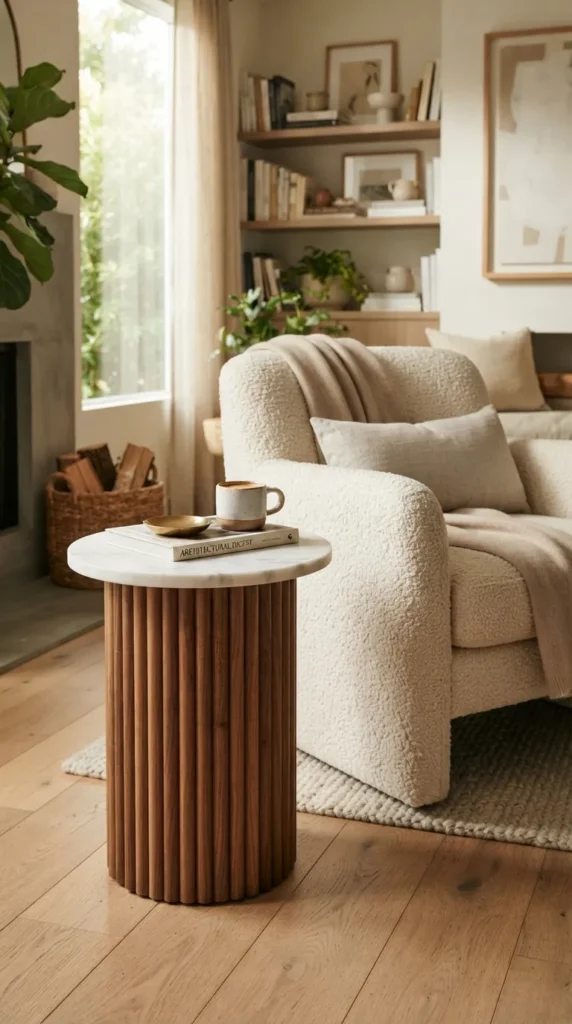
2. High-End Fluted Wood Pedestals and Planters
Fluted surfaces provide linear rhythm and vintage Scandinavian depth.
- What This Idea Means: Upcycling basic cylindrical cardboard tubes, wastebaskets, or plastic pots into luxury tambour-style accent tables and plant stands.
- Needs to Make That Thing: Half-round wooden moulding strips or natural bamboo skewers/dowels, sturdy base cylinder (such as a heavy cardboard concrete form tube or straight-sided planter), wood glue or heavy-duty construction adhesive, sandpaper, wood stain or satin black paint.
- How to Make It: Cut your wooden half-rounds to match the height of your cylinder precisely. Sand the edges smooth. Apply construction adhesive to the back of each strip and press them firmly vertically around the circumference, ensuring no gaps appear between the slats. Secure with painter’s tape while drying. Once set, apply a warm walnut stain or a rich matte paint and seal with a clear topcoat.
- Tips and Variations: Top a wide cylinder with a round piece of tempered glass or a marble cutting board to transform it into an elegant side table.
3. Layered Ambient Micro-Lighting
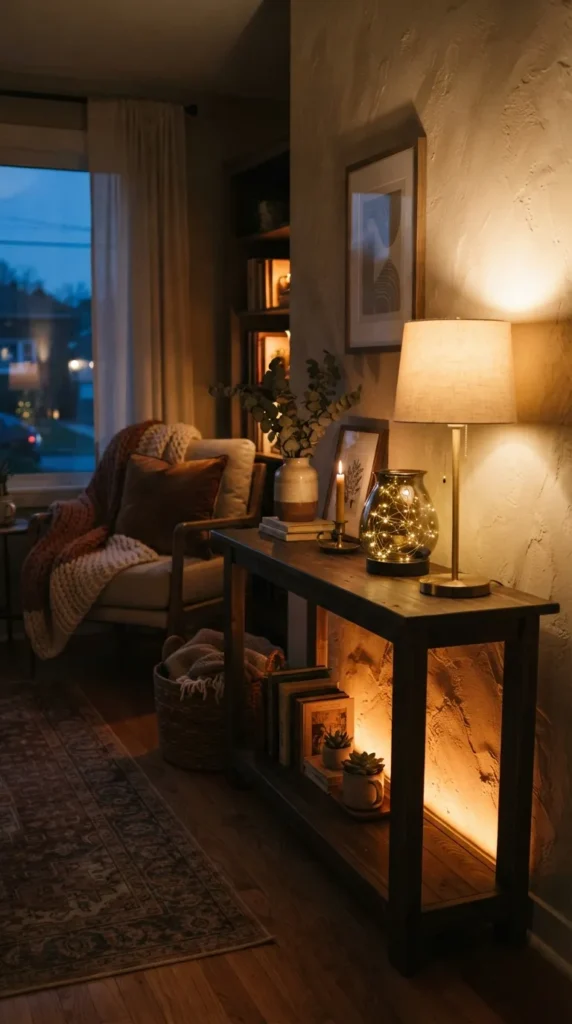
Luxury interiors avoid harsh overhead lighting in favor of warm, multi-level light pools.
- What This Idea Means: Arranging subtle, low-kelvin light sources across various heights to create an intimate, cocoon-like atmosphere.
- Needs to Make That Thing: Cordless rechargeable warm-glow lamps, amber fairy wire lights, glass hurricane globes, battery-operated flicker taper candles, plug-in dimmer switches.
- How to Make It: Place lighting elements at three distinct heights: low (floor lamps or uplights behind plants), mid-level (table lamps on consoles and mantels), and high (wall sconces). Ensure all bulbs are warm white (2200K to 2700K). Tuck slim rechargeable puck lights beneath floating shelves and inside glass cabinets.
- Tips and Variations: Place small battery-operated spotlights inside empty decorative ceramic urns pointing upward at textured plaster walls.
4. Oversized Faux Linen Pinch-Pleat Drapery
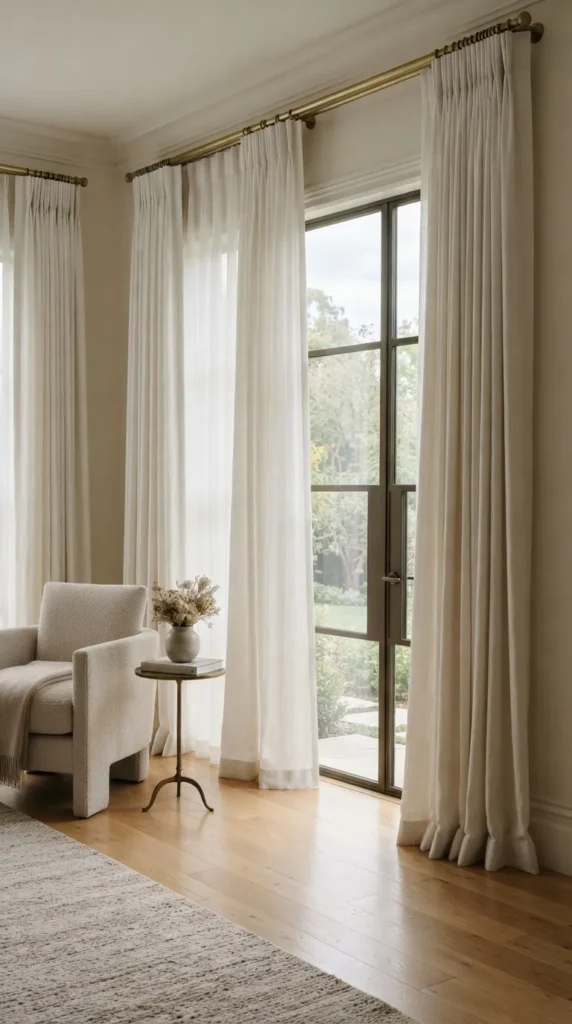
Floor-to-ceiling tailored curtains instantly give low-ceiling rooms grand scale.
- What This Idea Means: Upgrading inexpensive synthetic curtains by pinch-pleating and hanging them high and wide to mimic custom tailored linen drapes.
- Needs to Make That Thing: Budget linen-blend curtain panels (extra-long length, 96 or 108 inches), 4-prong pinch pleat hooks, pleater tape (if not pre-attached), heavy-duty curtain rings with eyelets, matte brass or black curtain rod.
- How to Make It: Mount the curtain rod as close to the ceiling as possible and extend it 10 to 12 inches past the window frame on each side. Insert four-prong pleater hooks into the top header tape of the panels to form crisp, double or triple pinch pleats. Hang the rings along the rod so the curtains skim the floor with a slight puddle. Use a handheld garment steamer to train the fabric into uniform vertical folds.
- Tips and Variations: Add inexpensive thermal lining behind lightweight panels to give them heavy, high-end drape weight.
5. Architectural Stone Pedestal Bowls
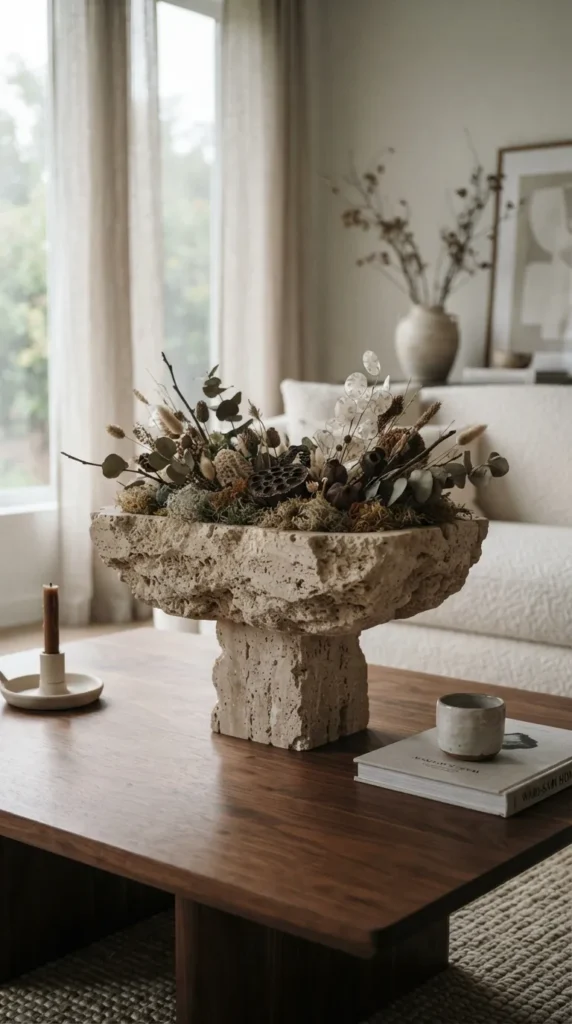
Organic stoneware and marble accents bring tactile weight to coffee tables.
- What This Idea Means: Assembling thrifted glass or ceramic bowls with solid bases and coating them to resemble travertine, poured concrete, or raw limestone.
- Needs to Make That Thing: Inexpensive glass or ceramic shallow bowl, matching sturdy candlestick or inverted ceramic planter (for the base), epoxy glue, stone-texture spray paint or baking soda mixed with flat latex paint, protective matte sealer.
- How to Make It: Thoroughly clean and sand the contact surfaces of both pieces. Join the base and the bowl securely using high-strength two-part epoxy. Allow 24 hours to cure. Mix flat beige latex paint with baking soda (roughly 3 parts paint to 1 part baking soda) to create a thick, gritty paste. Brush the mixture in smooth, criss-cross strokes over the entire assembly. Seal with a flat acrylic clear coat.
- Tips and Variations: Leave the interior raw and style with moss balls, raw crystals, or dried botanical seed pods.
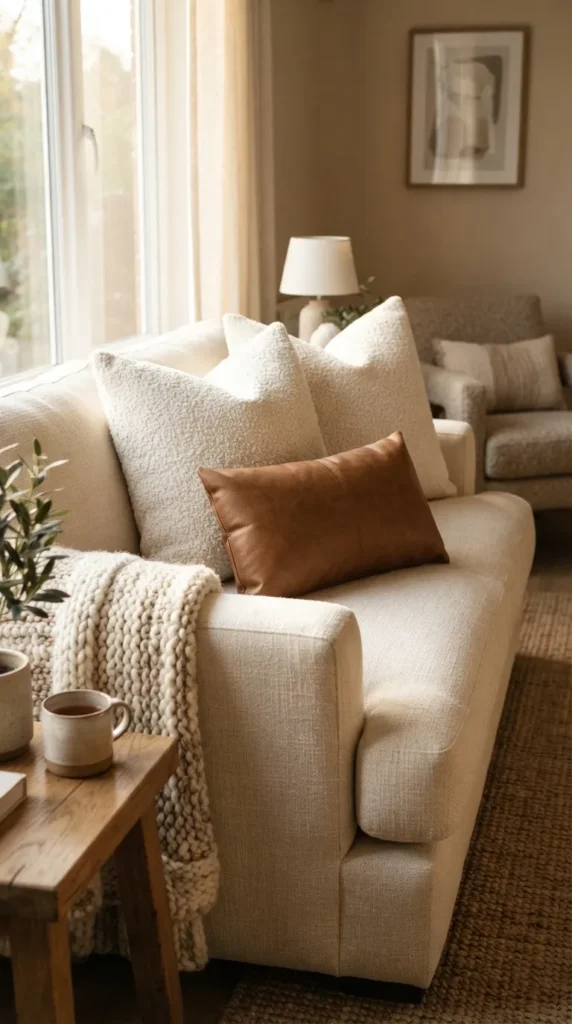
6. Neutral Bouclé Accent Pillow Refresh
Bouclé provides high-texture, cozy warmth associated with high-end designer seating.
- What This Idea Means: Re-covering worn throw pillows with tactile nubby bouclé fabric for modern, textured comfort.
- Needs to Make That Thing: Inexpensive off-white or oatmeal bouclé fabric by the yard, feather-down pillow inserts (sized 2 inches larger than your covers), sewing machine or high-bond fabric tape, invisible zipper or envelope closure.
- How to Make It: Measure your pillow insert and cut two squares of bouclé fabric 1 inch smaller than the insert for a plump fit. Sew the pieces right sides together with a 1/2-inch seam allowance, leaving space for the zipper or envelope fold. Turn right side out, push out the corners, and insert the feather-down pad.
- Tips and Variations: Combine square bouclé pillows with smooth faux-leather or crushed velvet lumbar pillows for contrasting textures.
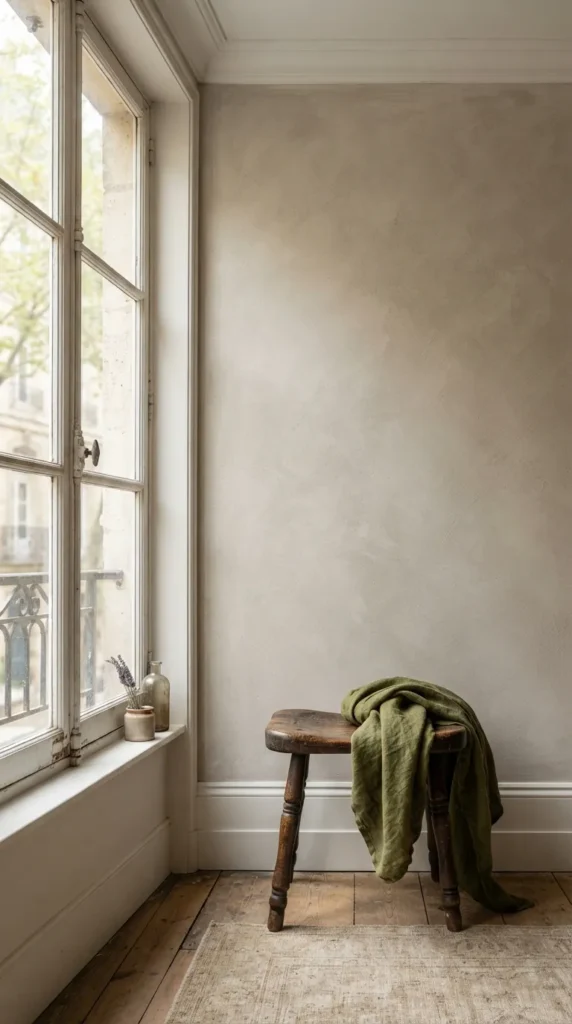
7. DIY Faux Limewash Accent Wall
Limewash walls give living spaces an old-world, breathable European villa atmosphere.
- What This Idea Means: Replicating authentic mineral limewash using budget flat matte paint, water, and systematic cross-hatch brushing techniques.
- Needs to Make That Thing: Matte wall paint in two complementary neutral shades (one slightly darker, one lighter), water, large masonry or block brush, mixing bucket, paint roller.
- How to Make It: Roll the darker base shade onto the wall and allow it to dry completely. In a bucket, dilute the lighter shade with equal parts water until it reaches a milky consistency. Dip the tips of the block brush into the diluted mix and apply it to the wall using rapid, overlapping “X” or cross-hatch motions. Feather out the edges quickly to prevent hard lines.
- Tips and Variations: Use soft taupe, chalky greige, or warm plaster tones for the most authentic Mediterranean look.
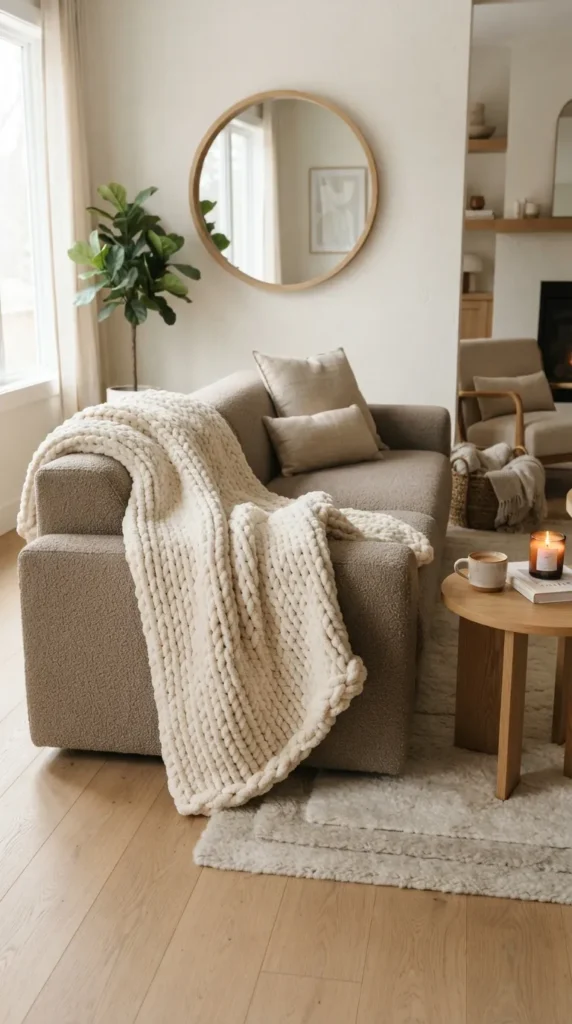
8. Chunky Cable-Knit Throw Blankets
An oversized knit blanket draped casually across a sofa communicates effortless comfort and warmth.
- What This Idea Means: Hand-knitting or sourcing an ultra-thick, continuous yarn blanket in muted tones.
- Needs to Make That Thing: 6 to 8 skeins of giant chenille or merino-style tube yarn (jumbo weight), a wide flat table or clean floor space.
- How to Make It: Tie a loose slipknot at the end of the yarn. Use your hands to pull loops through, creating a foundation chain of approximately 25 to 30 stitches. Work your way back across the chain by pulling a new loop through each stitch from bottom to top, maintaining an even 2-inch loop height. Continue row by row until reaching the desired length. Cast off by passing one loop over the next and tucking in the tail.
- Tips and Variations: Choose chenille tube yarn over raw roving wool to prevent shedding and pilling over time.
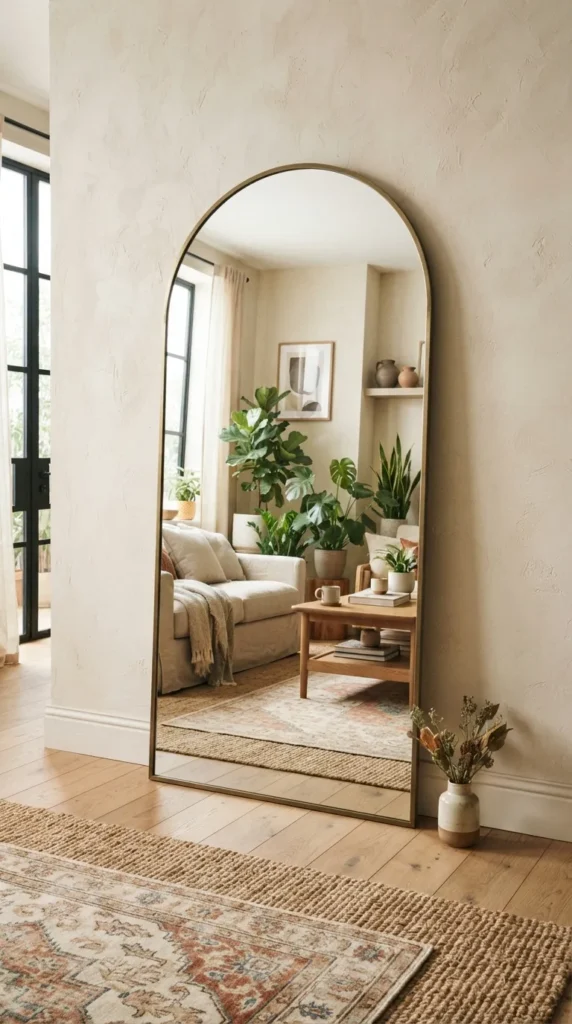
9. Custom Arch Mirror Dupe
Curved mirrors soften hard room angles and reflect light deep into seating areas.
- What This Idea Means: Upgrading a standard rectangular full-length mirror with a curved decorative top or wood trim to mimic arched boutique designs.
- Needs to Make That Thing: Inexpensive frameless full-length mirror, 1/4-inch MDF backing board, flexible PVC trim or wood dowels, mirror mastic adhesive, metallic leafing paste or matte black paint.
- How to Make It: Trace an arched profile onto the MDF sheet that extends beyond the top of the mirror. Cut the arch shape with a jigsaw and sand smooth. Mount the mirror securely onto the MDF board with mirror-safe mastic adhesive. Form the flexible PVC trim around the curved perimeter and fix with construction glue. Paint or gild the outer trim frame in antique brass or brushed black.
- Tips and Variations: Add vertical and horizontal grid strips over the mirror glass to create an arched French bistro window effect.
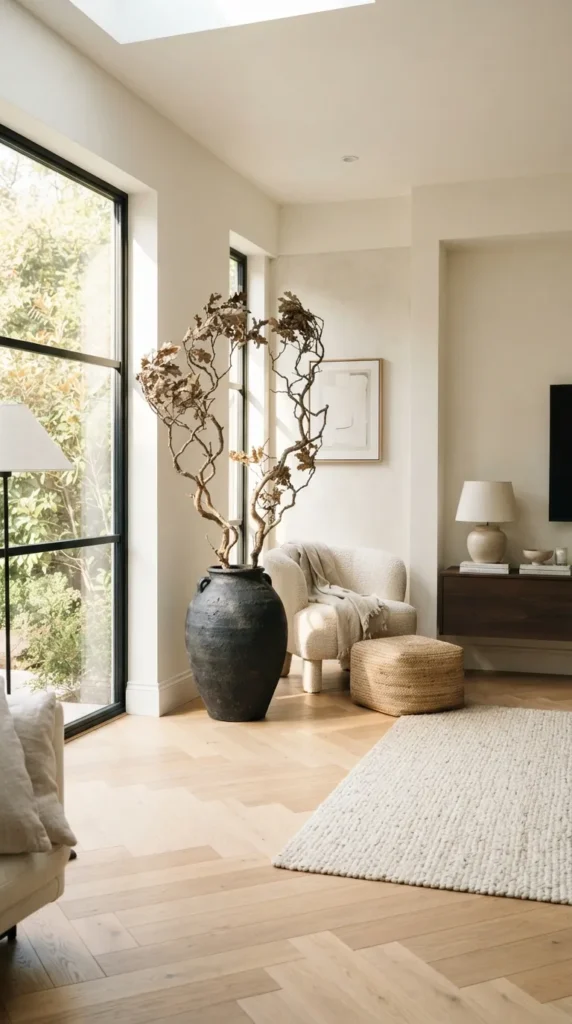
10. Botanical Branch Display in Massive Vessel
Tall, architectural dried branches add sculptural presence without the recurring cost of fresh flowers.
- What This Idea Means: Foraging real deciduous branches and displaying them in an oversized floor vase to introduce height and natural structure.
- Needs to Make That Thing: Foraged dried oak, quince, or eucalyptus branches (4 to 5 feet long), tall heavy ceramic or terra-cotta floor urn, floral foam or pebbles for stabilization.
- How to Make It: Prune foraged branches to remove weak or dead twigs, maintaining dramatic directional lines. Place heavy pebbles at the base of the urn for stability. Insert floral foam into the neck. Arrange 3 to 5 branch stems asymmetrically, allowing natural curves to lean gracefully into the room.
- Tips and Variations: Preserve fresh eucalyptus or olive branches in a glycerin-water mixture to keep them supple and fragrant for months.
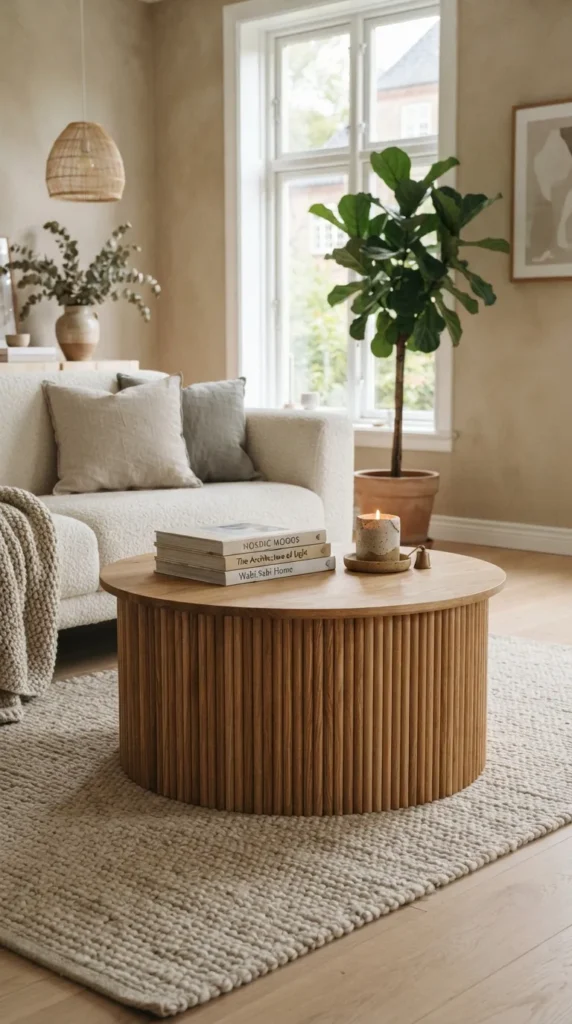
11. Built-In Style Fluted Coffee Table
Low, broad geometric coffee tables anchor luxury living spaces.
- What This Idea Means: Combining flat wood rounds with internal support structures wrapped in fluted molding to craft a sturdy designer table.
- Needs to Make That Thing: Two 30-inch circular wood tops (pine or birch), four 2×4 support struts, flexible wooden tambour panels or fluted trim slats, wood stain, matte protective poly finish.
- How to Make It: Join the two circular wood rounds using the vertical 2×4 struts spaced evenly inside to form a drum-shaped frame. Wrap flexible tambour paneling around the entire exterior edge, gluing and tacking it with small brad nails. Sand smooth, apply pre-stain conditioner, and finish with an ash-brown or natural oak stain followed by a matte polyurethane sealer.
- Tips and Variations: Add hidden recessed caster wheels beneath the bottom base for effortless repositioning.
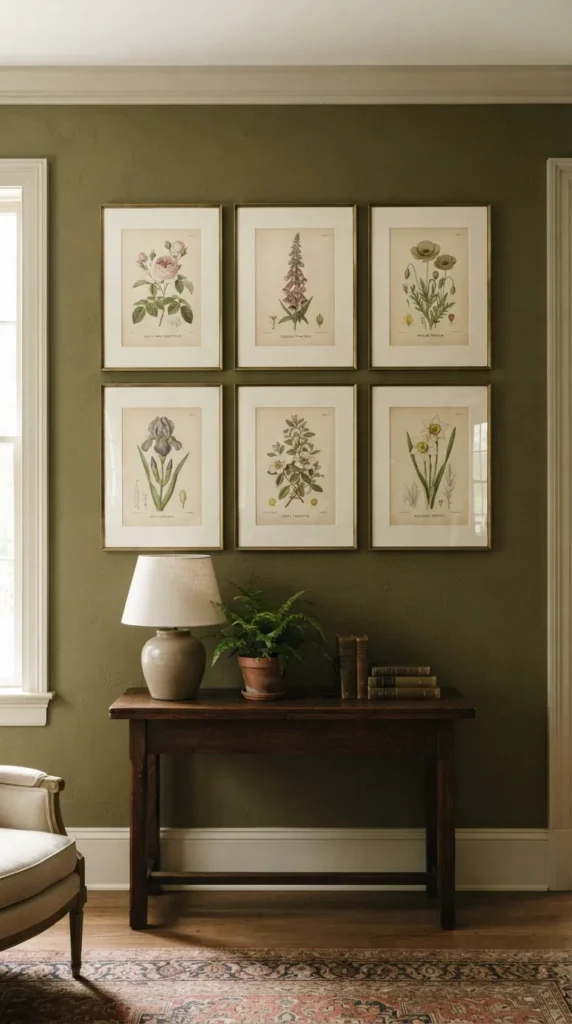
12. Framed Vintage Botanical Gallery Wall
Curated antique sketches bring heritage, depth, and character to modern homes.
- What This Idea Means: Sourcing public-domain botanical and architectural illustrations, printing them on textured paper, and mounting them in matched frames.
- Needs to Make That Thing: High-resolution public-domain digital art prints, heavy cream cotton-rag paper, inexpensive frames with wide white mats, antique gold spray lacquer.
- How to Make It: Download high-resolution vintage botanical sketches from free open-access museum archives. Print on heavy fine-art matte paper. Spray uniform wood or plastic frames with a layer of antique gold lacquer, followed by a light buffing of dark wax for patina. Mount the prints behind off-white acid-free matting. Hang them in a tight 2×3 or 3×3 geometric grid with 2-inch spacing.
- Tips and Variations: Keep frame dimensions identical across all pieces to maintain a clean, organized gallery look.
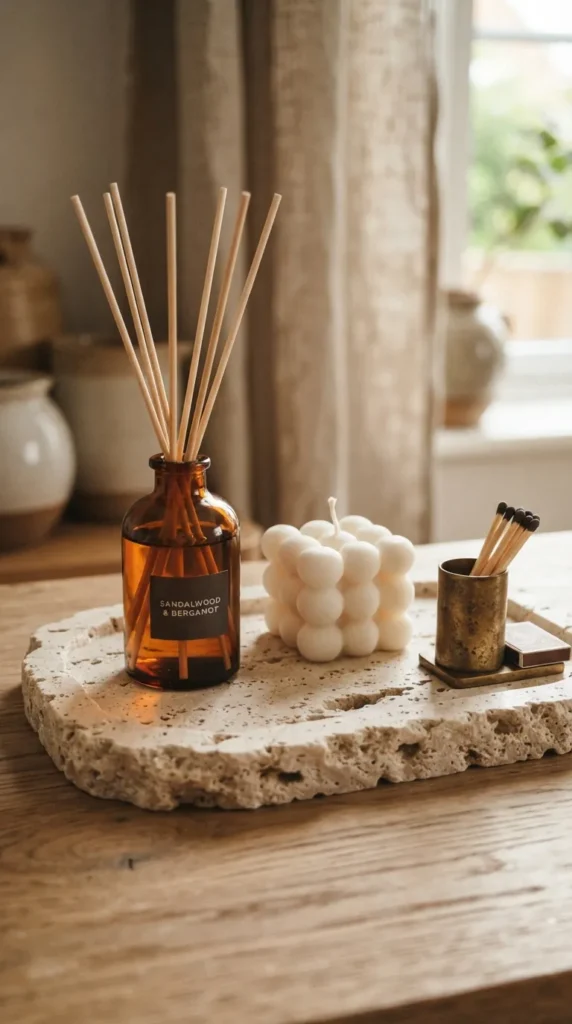
13. Minimalist Scent Diffusers and Sculptural Candles
Layering subtle, rich scent with sculpted wax accents adds both olfactory and visual warmth.
- What This Idea Means: Crafting bespoke reed diffusers and geometric soy wax candles that double as decorative objects.
- Needs to Make That Thing: Dark amber or matte ceramic bottles, dipropylene glycol (DPG) or sweet almond carrier oil, fragrance oils (such as sandalwood, amber, or cedar), rattan reed sticks, bubble candle silicone molds, soy wax flakes.
- How to Make It: For the diffuser, blend 70% carrier oil with 30% concentrated fragrance oil inside the amber vessel. Insert 6 to 8 rattan reeds, flipping them weekly. For the candles, melt soy wax to 185°F (85°C), mix in dye and fragrance, pour into silicone bubble/arch molds, let cure for 48 hours, and trim the cotton wick to 1/4 inch.
- Tips and Variations: Group the diffuser, candle, and an antique match striker together on a small travertine tray.
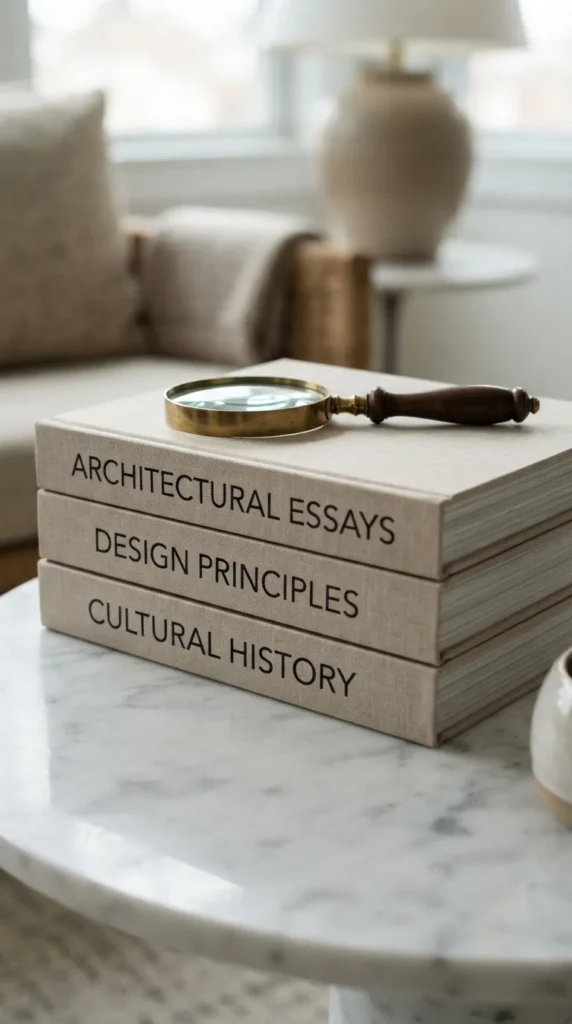
14. Luxury Coffee Table Book Stacking
Curated stacks of hardcovers create structured height for decorative vignettes.
- What This Idea Means: Transforming inexpensive thrifted hardcovers into neutral art books using bespoke dust jackets.
- Needs to Make That Thing: Second-hand large-format art, travel, or architecture books, heavy matte cardstock or linen paper, glue stick, fine-tip pigment pen or vinyl letter decals.
- How to Make It: Remove unwanted glossy dust jackets from thrifted books. Wrap each cover cleanly with heavy linen paper or cardstock. Print or hand-letter minimalist sans-serif typography onto the spine. Stack books horizontally in groups of 3 to 4 from largest to smallest, topping with a small brass object or magnifying glass.
- Tips and Variations: Sort books strictly by cover tone (such as bone, taupe, charcoal) when using exposed cloth-bound volumes.


15. Rich Wood Trim Accent Molding
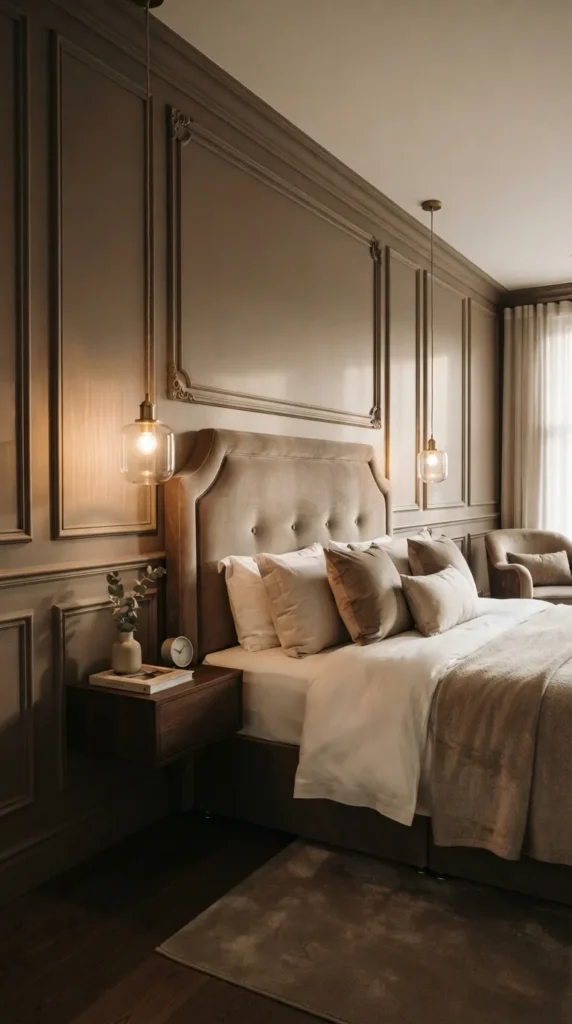
Wall molding adds structural character and timeless architectural weight to plain drywall.
- What This Idea Means: Installing picture-frame wall moulding or chair rails to give standard rooms classic, high-end proportions.
- Needs to Make That Thing: Primed MDF picture frame molding strips, miter shear or miter saw, construction adhesive, brad nailer, wood filler, paintable caulk, wall paint matching the base wall.
- How to Make It: Measure wall dimensions and sketch symmetrical rectangular frame layouts with 4-to-6-inch margins between boxes. Cut molding pieces with 45-degree corner angles. Adhere strips to the wall using construction glue and secure with small brad nails. Caulk every edge, fill nail holes, and paint the molding the exact same color and finish as the wall for a modern monochromatic look.
- Tips and Variations: Paint both the wall and molding in a rich, saturated earth tone like deep olive or muted clay for added coziness.
16. Sculptural Terracotta and Ceramic Vessels
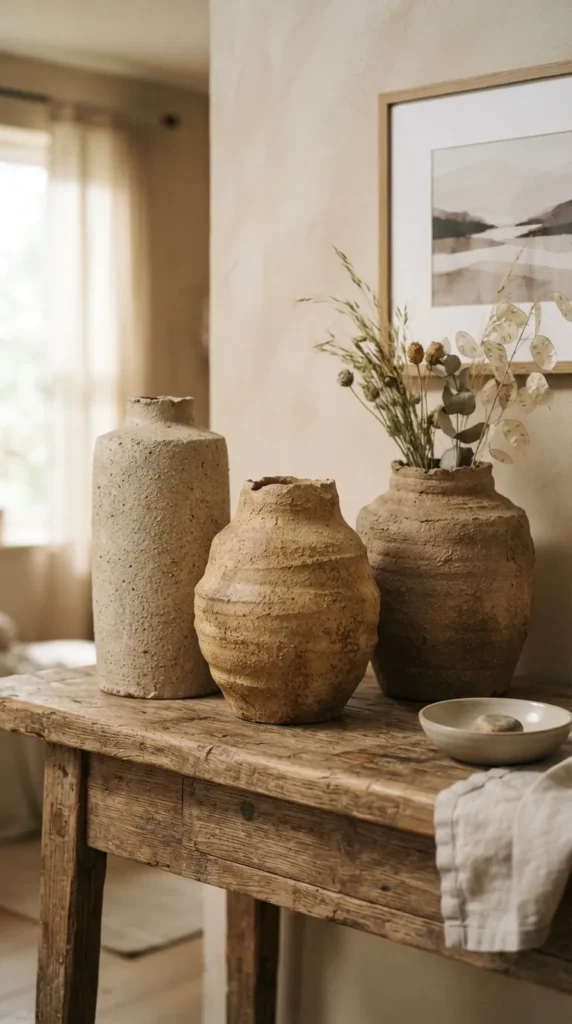
Matte earthenware vessels provide artisanal texture and earth-toned grounding.
- What This Idea Means: Upcycling thrifted glass vases into rustic pottery using paint and powdered additives.
- Needs to Make That Thing: Glass jars, bottles, or urns; acrylic or latex wall paint; baking powder or fine grout; natural sea sponge; fine-grit sandpaper.
- How to Make It: Mix paint with baking powder until it bubbles and thickens. Dab the mixture onto clean glass surfaces using a sea sponge to create a porous, earthenware texture. Apply two to three coats, letting each dry fully. Gently sand rough ridges to replicate unglazed, hand-thrown clay.
- Tips and Variations: Rub a small amount of damp garden soil or ground cinnamon into the crevices, then wipe away the excess to simulate aged patina.
17. Handcrafted Linen Bedding Ensemble
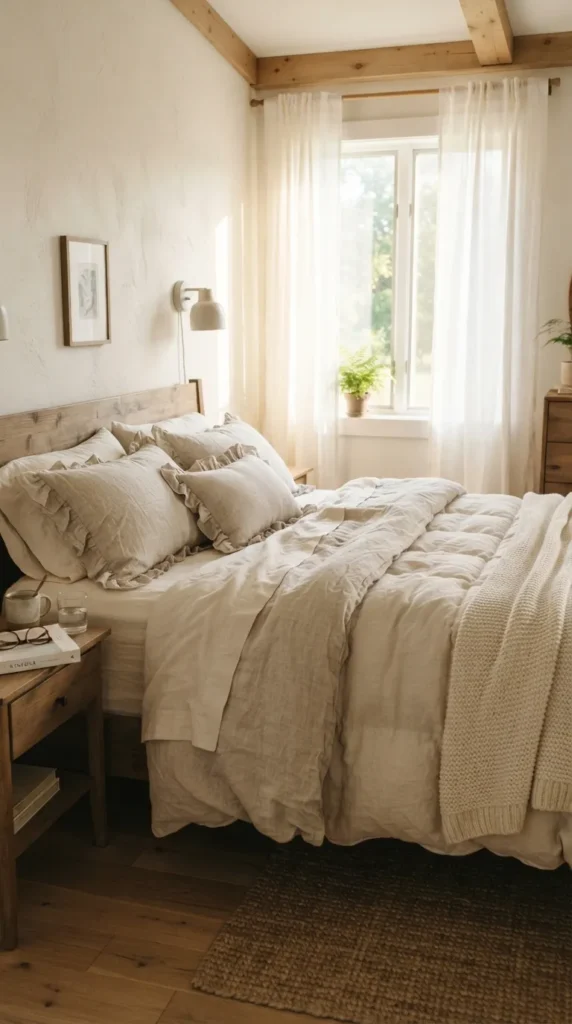
Draped, breathable natural linen creates an inviting, relaxed sanctuary.
- What This Idea Means: Dyeing and softening affordable linen fabric to assemble an organic, layered duvet and pillow set.
- Needs to Make That Thing: 100% pure medium-weight linen fabric or budget linen flat sheets, fabric softening wash, neutral fiber-reactive dyes (like oatmeal, warm slate, or washed olive), sewing machine.
- How to Make It: Pre-wash linen fabric several times on warm with gentle detergent and tumble dry with wool dryer balls to relax the natural fibers. Cut and sew two large panels together with inner corner ties and a bottom button closure to form a duvet cover. Layer over a high-loft down comforter and finish with ruffled-edge pillow shams.
- Tips and Variations: Leave edges unhemmed with a 1/2-inch fray for a relaxed, coastal-chic aesthetic.
18. Faux Marble Floating Shelf Displays
Floating shelves display curated collections while freeing up floor space.
- What This Idea Means: Wrapping budget floating shelves in realistic, thick-vein marble contact paper to emulate solid stone ledges.
- Needs to Make That Thing: Basic hollow-core wooden floating shelves, matte-finish heavy vinyl marble wrap, utility knife, squeegee tool, heat gun or hair dryer.
- How to Make It: Clean and dust the wooden shelf surface. Cut the vinyl wrap with a 2-inch excess border. Peel back the backing slowly, smoothing the vinyl onto the shelf face-down with a felt-edge squeegee to eliminate air pockets. Use low heat around the corners to stretch the vinyl smoothly around edges without creasing. Mount securely with concealed steel wall brackets.
- Tips and Variations: Style with brass objects, a single framed line drawing, and an asymmetrical trailing vine plant.
19. Velvet and Brass Hardware Upgrades
Small tactile hardware changes instantly refresh standard furniture and interior doors.
- What This Idea Means: Replacing generic knobs and handles with solid-feel brushed brass, matte metal, and rich fabric accents.
- Needs to Make That Thing: Heavy-weight brushed brass drawer pulls, velvet ribbon or leather pull strips, screwdriver, masking tape.
- How to Make It: Remove existing hardware from dressers, nightstands, or cabinets. Fill old holes with wood filler if spacing is changing, sand smooth, and touch up paint. Drill new holes if necessary. Fasten substantial brass hardware with matching washers. For wardrobe doors, loop rich velvet or saddle leather through brass ring pulls for mixed-material texture.
- Tips and Variations: Match metal tones across lighting, hardware, and decorative trays within the same room for visual consistency.
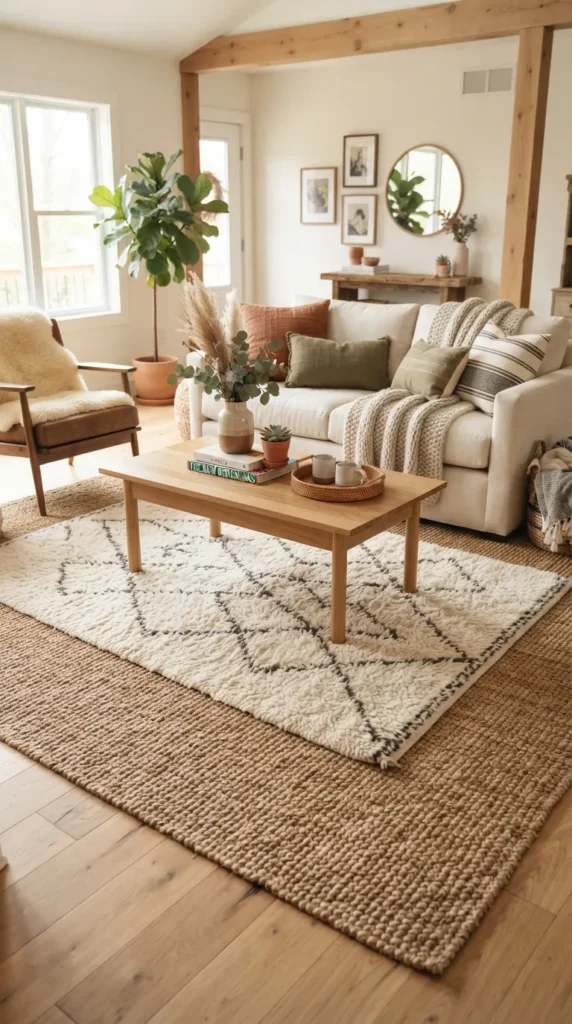
20. Layered Jute and Wool Area Rugs
Layering floor coverings provides both grounding texture and soft underfoot warmth.
- What This Idea Means: Using a large, inexpensive natural fiber rug as a foundation base, topped with a smaller, plush wool or faux-hide rug.
- Needs to Make That Thing: Oversized natural woven jute or sisal rug (8×10 or 9×12 ft), smaller high-pile plush wool or faux shearling rug (4×6 or 5×7 ft), heavy non-slip rug pads.
- How to Make It: Lay down the oversized non-slip pad and center the large jute rug to define the primary seating zone. Position front legs of all furniture onto the perimeter of the jute rug. Center the plush wool or textured accent rug diagonally or squarely over the base rug in front of the sofa to anchor the coffee table.
- Tips and Variations: Choose a chunky boucle weave for the base jute rug rather than flat weaves to maximize comfort underfoot.