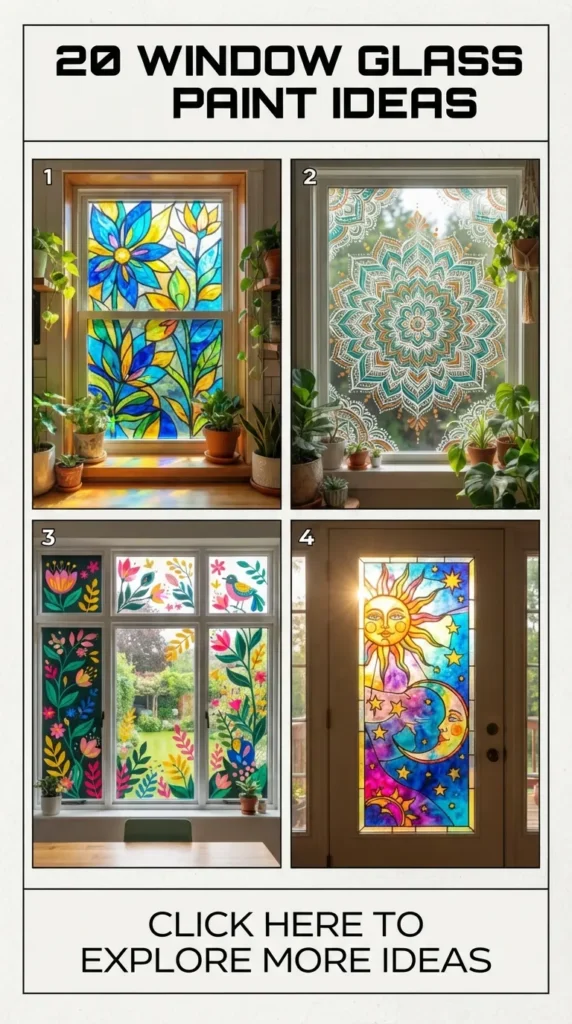
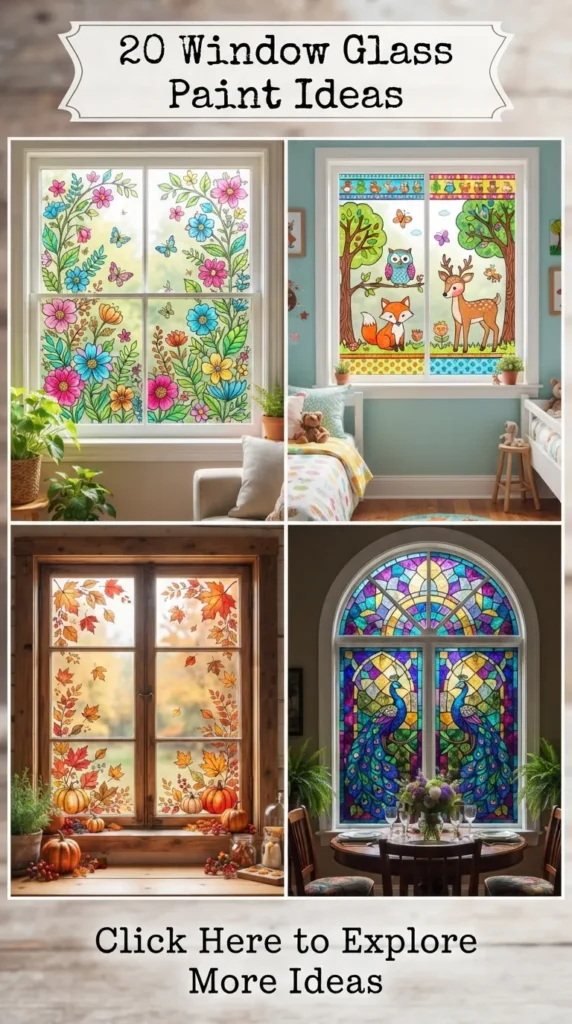
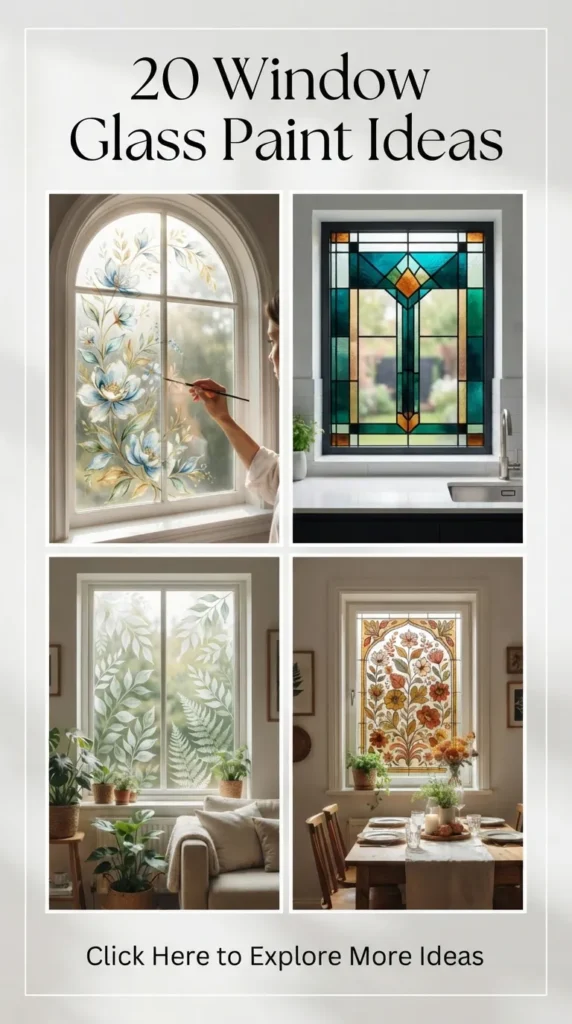
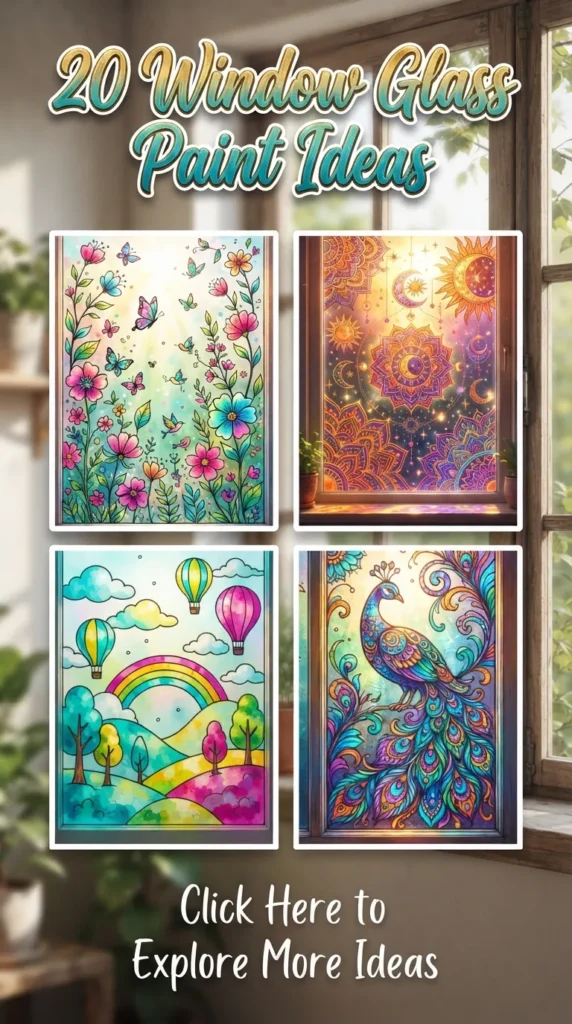
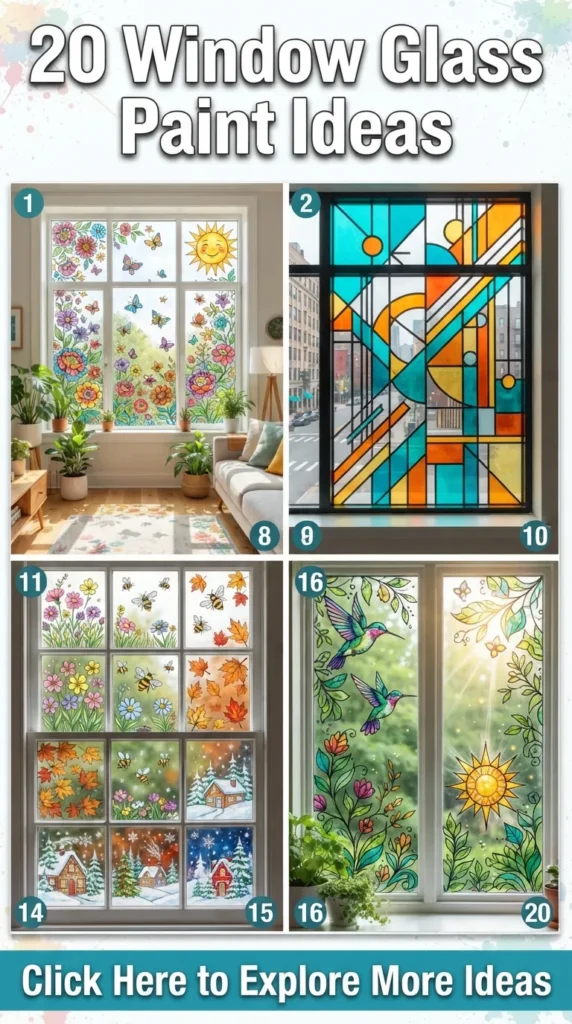
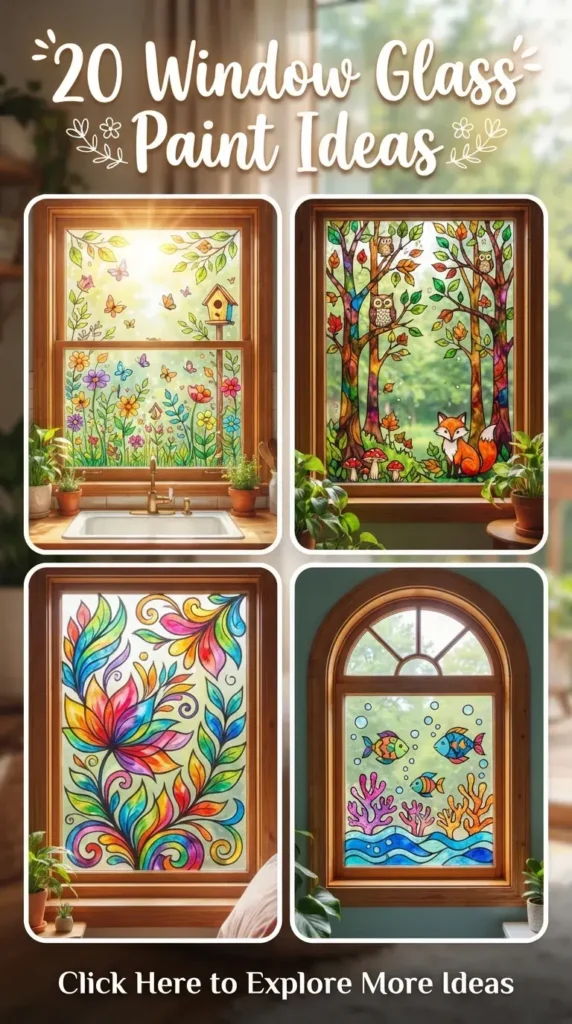
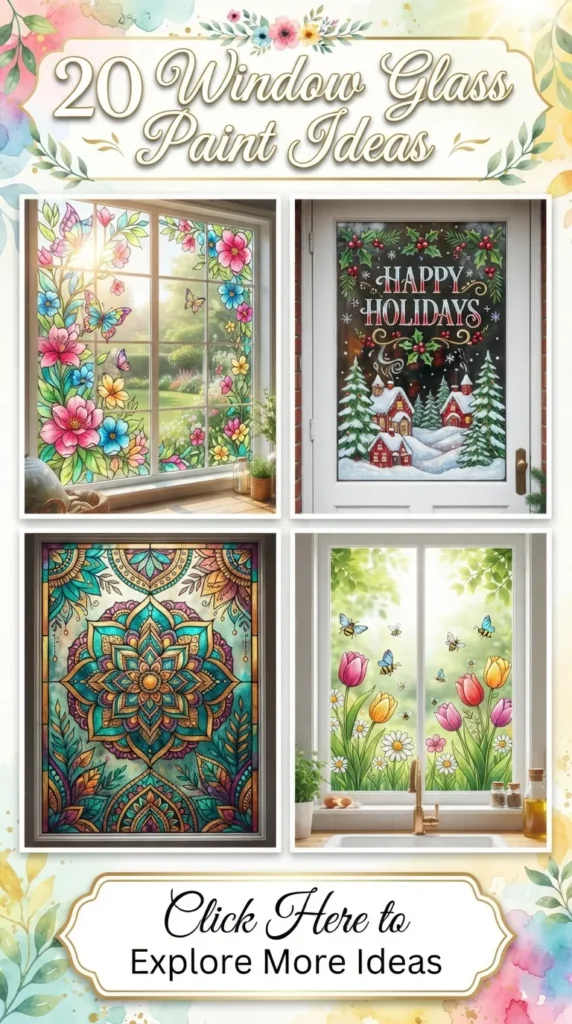
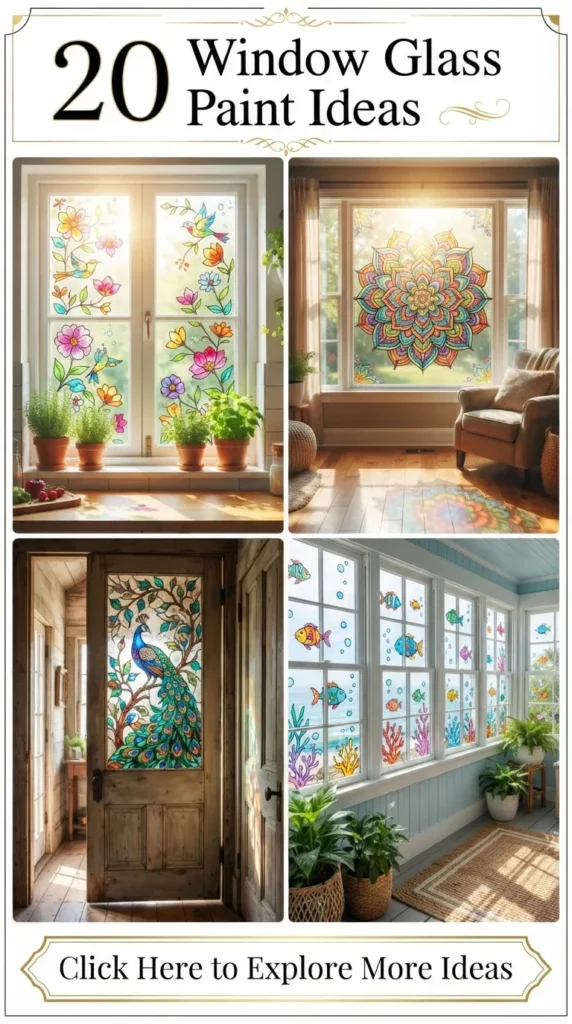
20 Window Glass Paint Ideas
Window glass painting bridges the gap between functional natural lighting and bespoke interior styling. Transforming plain panes into translucent visual art alters ambient light, creates privacy, and infuses living spaces with color, texture, and character. Whether you want to recreate vintage stained glass or introduce sleek, minimalist botanical lines, glass paints, gallery glass, and acrylic mediums offer versatile creative avenues.
Complete Guide to Materials, Preparation, and Surface Curation
Achieving durable, professional-grade window art begins with selecting the proper medium and thoroughly prepping the glass surface.
Medium Selection
- Translucent Glass Paints: Solvent- or water-based formulas that dry crystal-clear, allowing colored light to stream through like stained glass.
- Opaque Paint Pens & Acrylics Mixed with Mediums: Acrylics blended with glass medium provide strong line control and rich coverage, ideal for fine-line botanical and Scandinavian motifs.
- Liquid Leading / Dimensional Outliners: Thick, raised pastes used to mimic soldered metal seams on leaded glass patterns.
- Frosted Glass Sprays and Etching Creams: Produce a permanent or semi-permanent matte texture that diffuses harsh light and boosts privacy.
Surface Preparation Steps
- Deep Clean: Wash the pane with isopropyl alcohol (70% or higher) or an ammonia-free glass cleaner to strip away dust, grease, and finger oils.
- Lint-Free Dry: Wipe the surface down with a microfiber towel to avoid lint and stray particles.
- Template Setup: Secure your printed or drawn reference pattern to the exterior side of the window using painter’s tape, allowing you to trace easily from the inside.
- Ambient Temperature: Apply paints at temperatures between 18°C and 25°C. Direct, intense sunlight can cause the paint to dry too quickly, leading to bubbling or uneven leveling.
20 Aesthetic Window Glass Paint Ideas
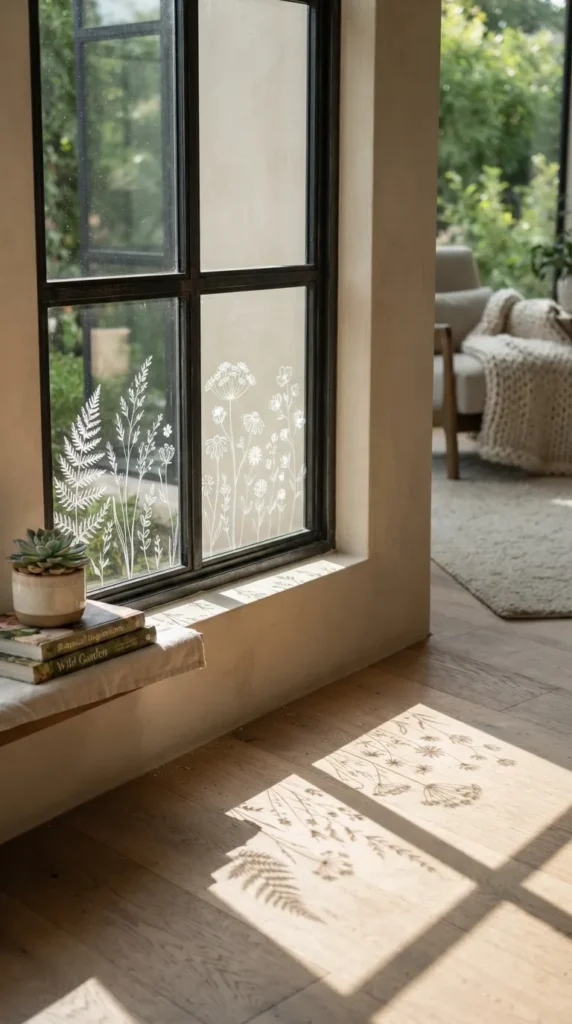
1. Minimalist Fine-Line Botanical Wildflowers
What This Idea Means:
Delicate, single-stroke wildflowers running organically along the lower border of a windowpane. This design brings outdoor greenery inside while keeping the glass open, airy, and light-filled.
How to Make It:
- Clean the glass thoroughly with isopropyl alcohol.
- Tape a line-art reference of wildflowers to the exterior of the window.
- Use a fine-tip opaque white or jet-black acrylic enamel paint pen to trace continuous contour lines.
- Vary stroke pressure to give stems, petals, and leaves natural organic weight.
- Let the paint cure undisturbed for 24 hours.
Tips and Variations:
- Tip: Keep a damp cotton swab on hand to clean up line wobbles before the paint sets.
- Variation: Swap monochrome white for muted sage, terracotta, and soft flax tones.
2. Modern Geometric Faux Stained Glass
What This Idea Means:
A contemporary take on traditional cathedral windows using crisp geometric angles, sharp color blocking, and clean outlines.
How to Make It:
- Map out an asymmetrical geometric grid across the window using narrow painter’s tape or low-tack masking tape.
- Trace along the tape borders using a black dimensional liquid leading tube. Let the outlines dry for 8 hours.
- Fill each section with translucent glass paints in jewel tones like amber, sapphire, and emerald.
- Use a flat shader brush or squeeze-bottle applicator to lay paint evenly right up to the raised borders.
- Pop any surface air bubbles with a clean toothpick.
Tips and Variations:
- Tip: Work top-to-bottom so your hands don’t smudge wet paint below.
- Variation: Use pastels (blush, powder blue, soft ochre) with silver leading for an Art Deco finish.

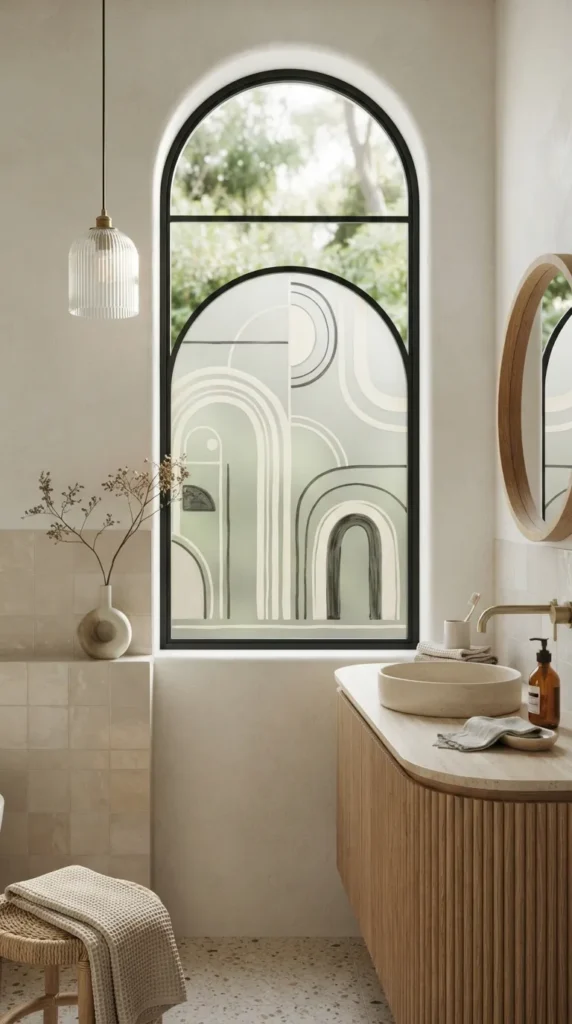
3. Scandinavian Frosted Glass Archways
What This Idea Means:
Soft, frosted arch motifs that bring minimalist Nordic architectural shapes and light diffusion to living rooms, bathrooms, and entryways.
How to Make It:
- Measure the window and sketch arch templates onto adhesive contact paper.
- Cut out the arches, peel off the backing, and apply the negative stencil firmly to the glass.
- Dab frosted-glass paint or sea-sponge texturing medium evenly across the open stencil area.
- Apply 2 to 3 thin coats, allowing 20 minutes of drying time between layers.
- Peel away the stencil while the final coat is slightly tacky to ensure crisp borders.
Tips and Variations:
- Tip: Build up paint gradually; heavy coats cause sagging and uneven runs.
- Variation: Nest multiple concentric arches inside each other, alternating frosted and clear panels.
4. Golden Sunburst and Celestial Phases
What This Idea Means:
Warm metallic rays, crescent moons, and constellations centered on the pane to catch direct morning or afternoon light.
How to Make It:
- Center a gold paint pen or metallic glass liner on the window to anchor a central half-sun or full celestial disk.
- Pull thin, radiating linear rays outward toward the window edges using a ruler.
- Add tiny star clusters, dots, and crescent moons between the rays.
- Fill select solar sections with sheer amber or honey glass paint to amplify the warm reflection.
Tips and Variations:
- Tip: Rest your pinky finger lightly on dry glass to steady your hand during straight line work.
- Variation: Use champagne gold, rose gold, and antique copper together for a multi-tonal metallic finish.

5. Moody English Cottage Meadow Silhouette
What This Idea Means:
A rich, dark botanical silhouette along the bottom third of the glass, featuring ferns, foxgloves, and wild grasses that mimic an English garden.
How to Make It:
- Tape a detailed silhouette stencil along the bottom frame.
- Use an opaque charcoal, forest green, or deep plum glass paint with a synthetic detail brush.
- Paint the tallest focal stems first (delphiniums, foxgloves), then fill in lower layers with dense fern fronds and clovers.
- Feather the tips of stems outward to soften the transition from paint to clear glass.
Tips and Variations:
- Tip: Layer two coats of paint to prevent brush strokes from showing against bright daylight.
- Variation: Tint the upper glass with a thin wash of translucent periwinkle to create a twilight sky effect.

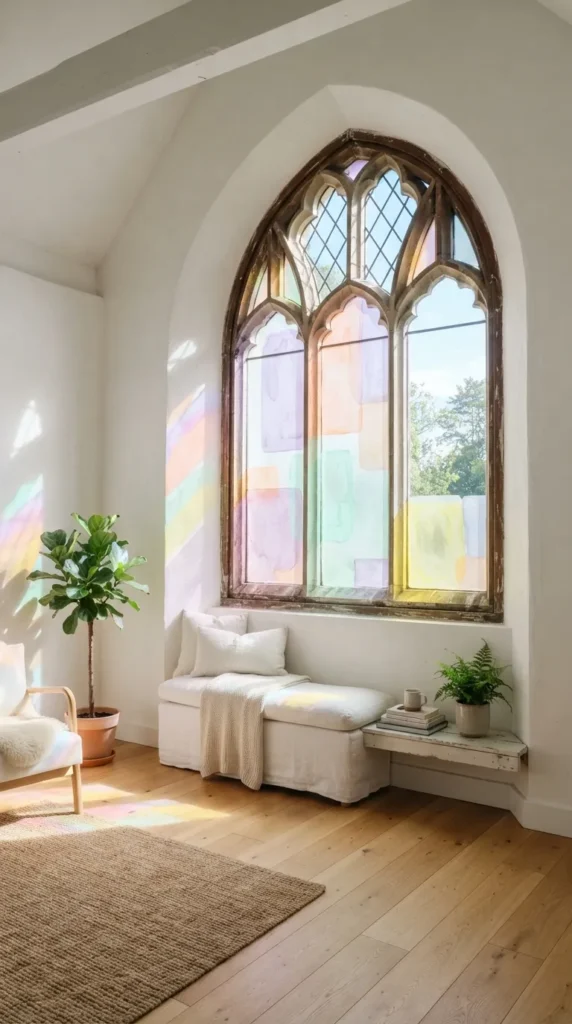
6. Translucent Pastel Color Wash Collage
What This Idea Means:
Overlapping organic watercolor-style shapes in soft pastel tones, casting soft, colorful patterns across the room as sunlight shifts.
How to Make It:
- Mix clear glass paint medium with small drops of pastel glass dyes (lilac, mint, peach, buttercup).
- Paint large, freeform, rounded shapes across the window using a broad flat hake brush.
- Overlap the edges of adjacent shapes while wet to blend unique transitional hues.
- Keep paint layers thin so the glass maintains high clarity and transparency.
Tips and Variations:
- Tip: Tilt your brush at a shallow angle to minimize brush-stroke texture.
- Variation: Add fine metallic gold line work around select color boundaries once dry.



7. Art Nouveau Cascading Vines and Tendrils
What This Idea Means:
Curved, flowing botanical tendrils and sinuous leaf patterns that frame the window border, inspired by early 20th-century Art Nouveau design.
How to Make It:
- Draw flowing S-curves and whiplash lines along the top corners and side edges of the pane.
- Outline the curves with dark bronze or pewter dimensional outliner.
- Fill leaf cavities with translucent olive green, moss, and pale chartreuse glass paint.
- Add small droplet accents and spiraling tendrils branching inward toward the center.
Tips and Variations:
- Tip: Apply consistent, even pressure on the outliner bottle to avoid lumpy beads.
- Variation: Add small iris or water lily blooms along the main vine stems for pops of accent color.
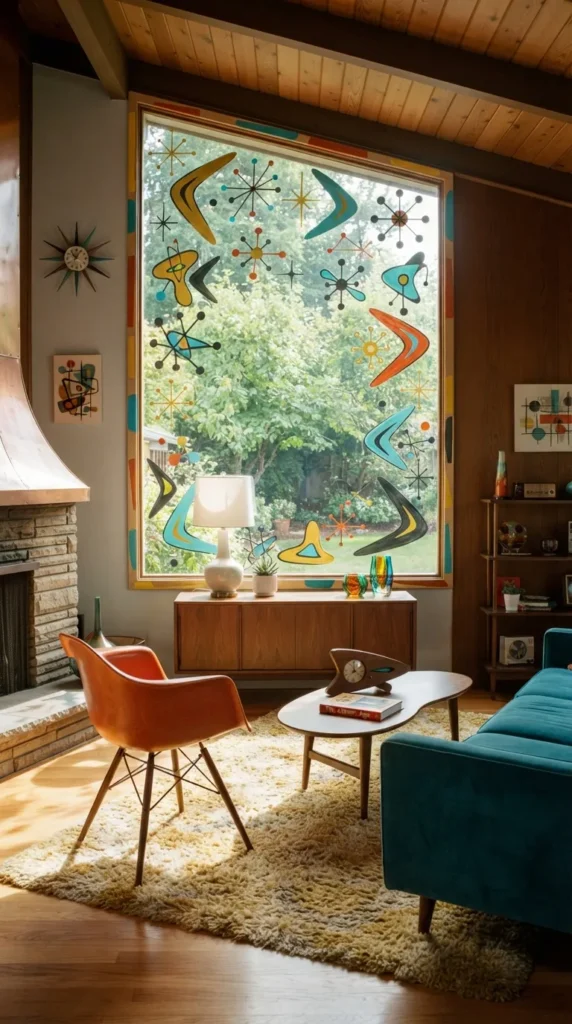
8. Retro Mid-Century Modern Abstract Shapes
What This Idea Means:
A vibrant 1950s atomic-era look featuring boomerangs, floating kidney shapes, starbursts, and stacked organic forms.
How to Make It:
- Create stencils of mid-century abstract shapes: rounded triangles, retro pods, and asymmetrical diamonds.
- Trace outlines with a black or white glass paint marker.
- Fill shapes with semi-opaque retro shades like mustard yellow, teal, burnt orange, and olive.
- Scatter small black four-point stars and atomic line crosses across the open clear spaces.
Tips and Variations:
- Tip: Use painter’s tape to keep straight-sided shapes sharp.
- Variation: Stick to a two-tone palette (such as black and mustard) for a restrained graphic look.
9. Moroccan Arabesque Mosaic Mandala
What This Idea Means:
An intricate symmetrical mandala using ornate Moroccan latticework, rich jewel tones, and fine-line detailing centered on the pane.
How to Make It:
- Find the exact center of the windowpane and anchor a circular arabesque pattern template to the outside glass.
- Trace the pattern from the center outward using gold or copper relief paste.
- Fill the intricate spaces with deep ruby, royal blue, turquoise, and saffron translucent paint using a dropper.
- Let the relief dry completely between sections to prevent neighboring colors from bleeding together.
Tips and Variations:
- Tip: Use a precision squeeze bottle with a needle tip for tiny geometric pockets.
- Variation: Leave the glass clear between the metallic gold linework for a lighter, open-lattice look.
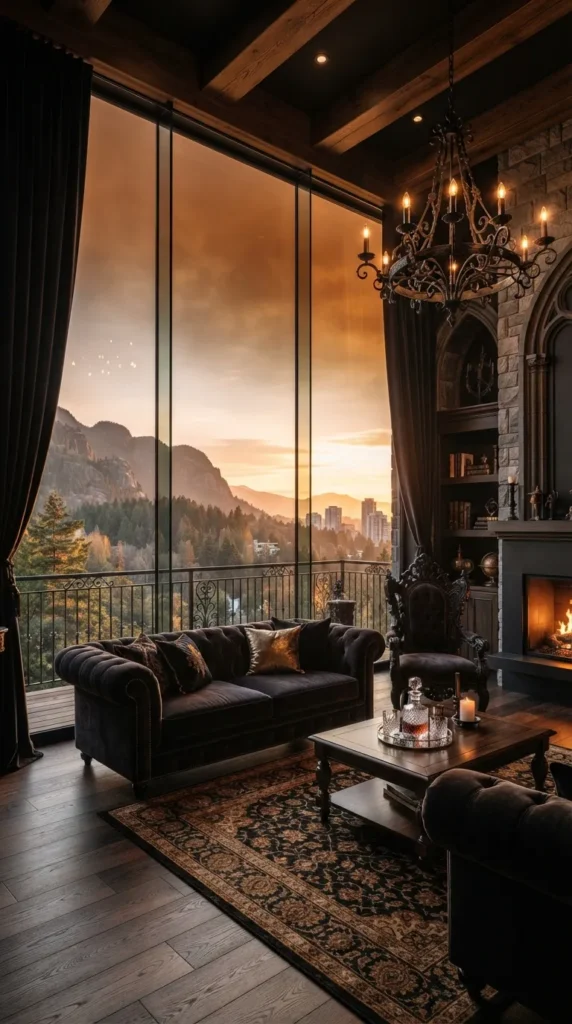
10. Moody Amber and Smoked Glass Ombré
What This Idea Means:
A warm, gradient tint fading from deep amber at the top to smoky bronze and crystal clarity at the bottom, creating a warm, golden-hour glow indoors.
How to Make It:
- Mix a gradient palette: concentrated amber glass paint, diluted amber, warm honey, and clear blending medium.
- Apply the darkest amber along the top edge using a wide, soft-bristle blending brush.
- Blend progressively lighter shades downward, working wet-in-wet with long, horizontal strokes.
- Use pure clear medium at the transition zone to fade the bottom into bare glass.
Tips and Variations:
- Tip: Work quickly to blend the gradient bands before the paint starts to set.
- Variation: Try a cool-toned ombré fading from midnight blue to seafoam green and clear glass.
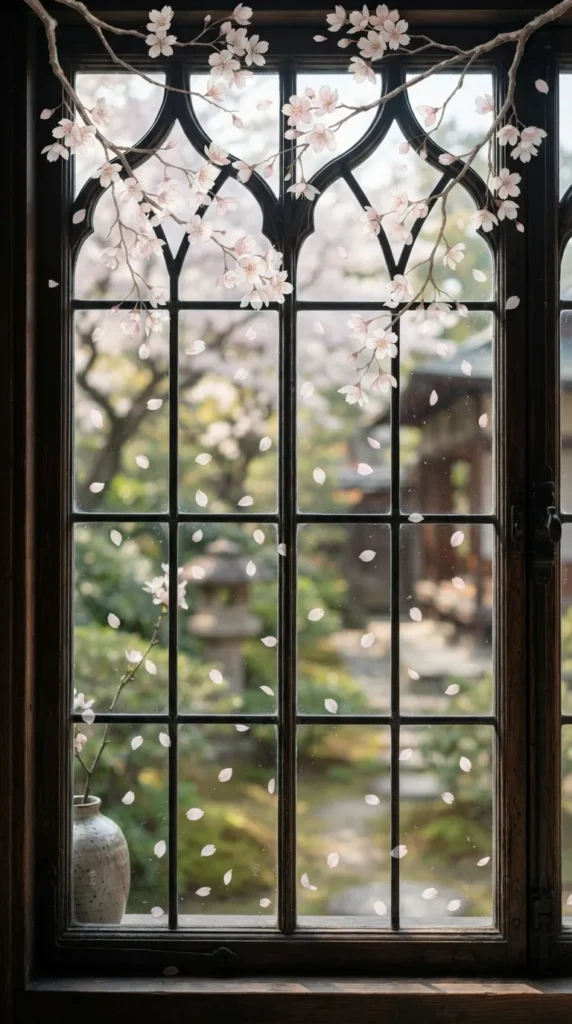
11. Ethereal Dripping Japanese Cherry Blossoms (Sakura)
What This Idea Means:
Delicate sakura branches sweeping down from the top corner of the window, with soft pink petals that appear to drift across the pane.
How to Make It:
- Paint dark brown, textured branches reaching downward from an upper corner using an angled liner brush.
- Dab clustered cherry blossoms along the twigs with soft pink, magenta, and pure white glass paints.
- Use a dry round brush to stipple petal centers with deep crimson accents.
- Paint scattered, individual falling petals drifting downward across the middle of the pane.
Tips and Variations:
- Tip: Vary petal opacity—make foreground blossoms solid and background blossoms sheer for depth.
- Variation: Swap cherry blossoms for golden ginkgo leaves or hanging wisteria clusters.
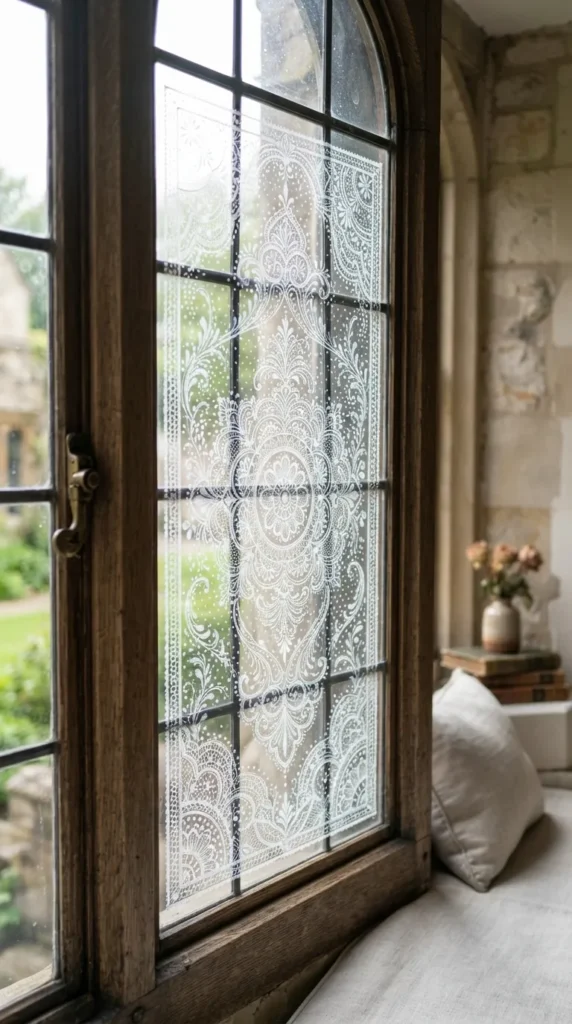
12. Monochromatic White Lace and Filigree Patterns
What This Idea Means:
Intricate lace textures and Victorian filigree rendered in bright white paint, creating a classic privacy screen that lets natural light filter through.
How to Make It:
- Secure a lace-pattern or crochet template to the outside of the window.
- Use an extra-fine (0.7mm) opaque white glass pen to trace delicate cross-hatched mesh and floral lace medallions.
- Build up density around the center and bottom of the pane for privacy, then taper the lace toward the top.
- Add tiny dot-work borders along the edges for a finished, doily-style trim.
Tips and Variations:
- Tip: Keep a steady hand by resting your forearm on a stable step ladder or platform.
- Variation: Use frosted white glass paint on the back side of the lace shapes for extra privacy and diffusion.
13. Minimalist Bauhaus Primary Color Blocks
What This Idea Means:
A bold, modernist layout using thick black structural grids filled with rich primary colors: red, blue, and yellow, alongside clear glass panels.
How to Make It:
- Map a Bauhaus-style asymmetrical grid using wide black graphic art tape or heavy black relief paint.
- Select 3 to 4 sections to paint in rich, high-gloss primary colors: cadmium red, cobalt blue, and lemon yellow.
- Leave 60% of the remaining sections completely clear or lightly frosted to maintain balance.
- Ensure paint runs smoothly to the edges of the black grid tape for clean, sharp edges.
Tips and Variations:
- Tip: Ensure lines are square and level using a spirit level during layout.
- Variation: Swap primary colors for a muted contemporary palette: terracotta, sage, and pale mustard.
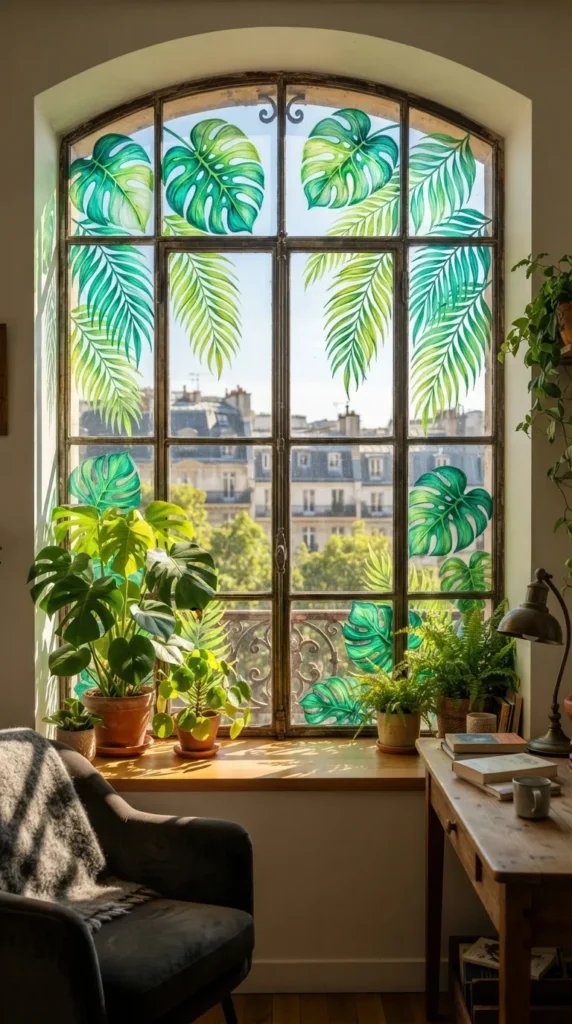
14. Lush Tropical Monstera and Palm Fronds
What This Idea Means:
Large, overlapping tropical leaves that frame the edges of the window, creating a vibrant indoor greenhouse feel.
How to Make It:
- Sketch large monstera, banana leaf, and areca palm outlines around the window perimeter.
- Trace the silhouettes using a dark forest green or deep teal paint pen.
- Fill the leaves with translucent greens, blending lime, emerald, and dark jade within each frond.
- Paint leaf veins with fine white or pale yellow lines once the base coat is fully dry.
Tips and Variations:
- Tip: Overlap leaves at varying transparencies to create a sense of lush foliage depth.
- Variation: Add soft metallic gold vein details to transform the tropical look into an Art Deco style.


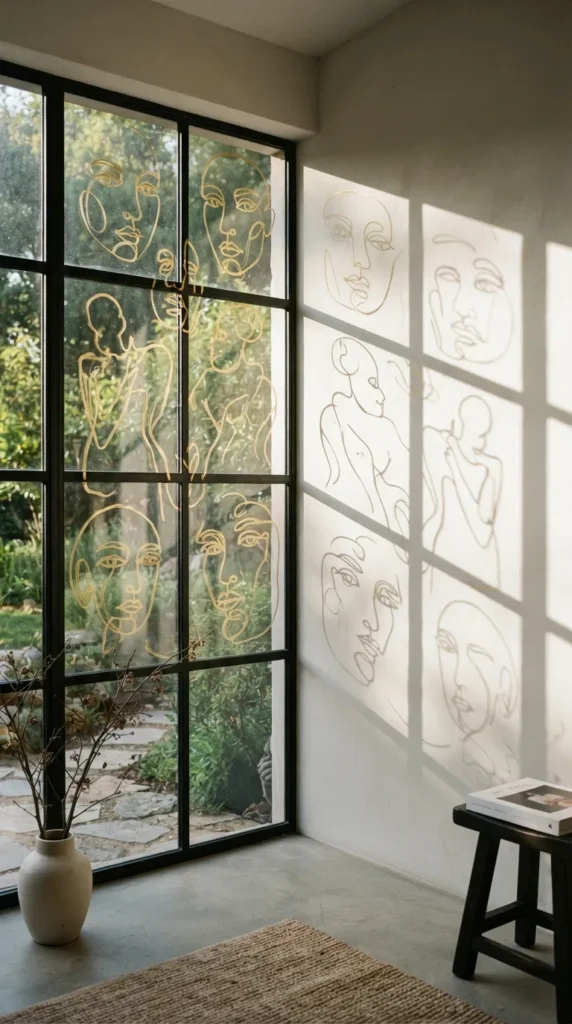

15. Gilded Line-Art Portraits and Figurative Silhouettes
What This Idea Means:
Minimalist, continuous-line portraits and abstract human figures drawn in reflective gold, casting clean sculptural shadows in direct sunlight.
How to Make It:
- Select a continuous-line face or torso design and position the template behind the glass.
- Trace the entire continuous contour using a metallic bright gold glass marker or raised liquid gilding.
- Keep lines smooth, fluid, and continuous without lifting the marker mid-stroke.
- Accent the portrait with small, sheer abstract color blocks behind cheeks, lips, or hair.
Tips and Variations:
- Tip: Practice drawing the continuous stroke on paper first to master hand speed and paint flow.
- Variation: Use a combination of mirror-chrome silver and rich gold for dual-tone linework.
16. Soft Gradient Sunset Horizon
What This Idea Means:
A horizontal landscape that transitions through sunset tones: violet, warm crimson, radiant orange, and pale luminous yellow across the glass.
How to Make It:
- Section the window horizontally into four or five blending zones using removable side markers.
- Apply translucent glass paints across each zone: deep violet at the top, transitioning down through magenta, cadmium orange, and warm golden yellow.
- Blend adjacent color bands together while wet using a wide badger-hair or soft synthetic mop brush.
- Keep strokes strictly horizontal from left to right to create clean, atmospheric sky layers.
Tips and Variations:
- Tip: Clean your blending brush between color transitions to keep the yellow band bright and clean.
- Variation: Paint a crisp, solid black mountain ridge or tree line across the bottom horizon.
17. Coastal Sea-Glass and Abstract Wave Ripples
What This Idea Means:
Wavy, flowing ribbons of aqua, seafoam, and ocean blue that run horizontally across the pane, mimicking ocean ripples and frosted sea glass.
How to Make It:
- Map organic, sinuous wave lines across the lower two-thirds of the window.
- Blend sea-glass colors: aqua, turquoise, pale cerulean, and frosted white glass paint.
- Apply paint with a flat brush using wavy, rhythmic strokes that mimic moving water.
- Dab tiny areas of white textured paint along the wave crests to look like sea foam.
Tips and Variations:
- Tip: Mix frosted medium into your blue paints to capture that authentic, tumbled sea-glass texture.
- Variation: Incorporate deep navy and rich indigo layers for a deeper, stormy-ocean palette.
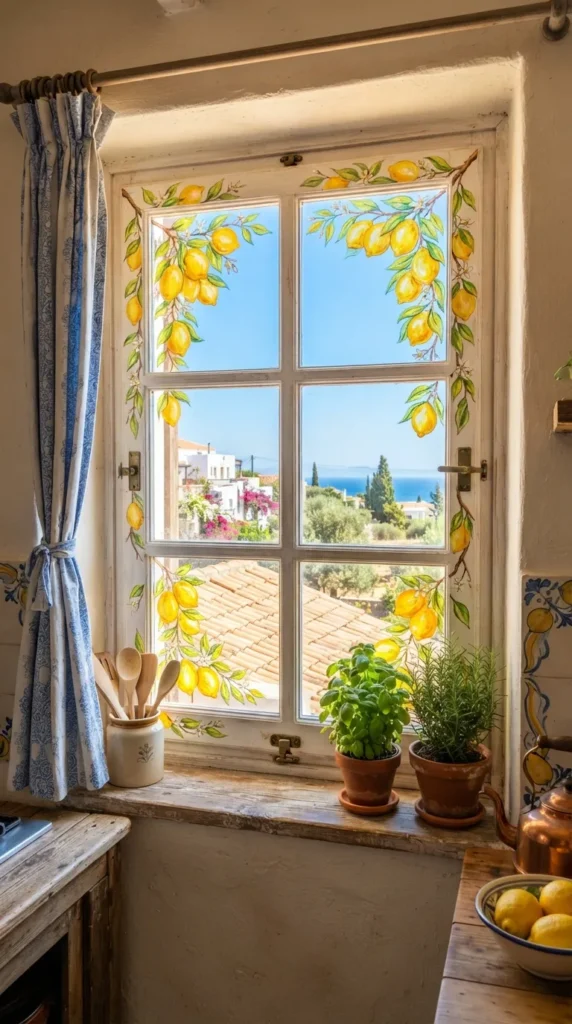
18. Vintage Whimsical Fruit and Citrus Branches
What This Idea Means:
Bright Mediterranean citrus branches—lemons, oranges, and pomegranates—framing the top and sides of the glass, ideal for kitchen or dining windows.
How to Make It:
- Tape a pattern of hanging branches, leaves, and round citrus fruits around the window frame edges.
- Outline leaves and fruits with a thin brown or dark green paint pen.
- Fill fruits with translucent, juicy yellows and oranges; shade with soft ochre around the edges for roundness.
- Fill leaves with olive and bright lime green, leaving small unpainted highlights on each fruit for a glossy look.
Tips and Variations:
- Tip: Stipple a lighter yellow in the center of lemons to create a sunny, glowing highlight.
- Variation: Paint olive branches with deep purple-black olives for a more subdued, rustic Tuscan look.
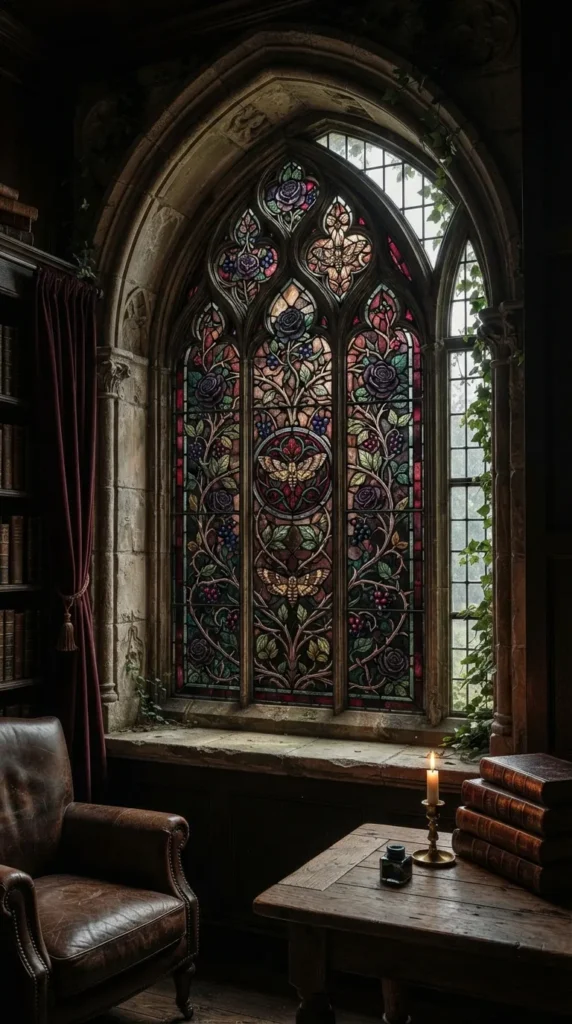
19. Gothic Floral Night-Garden Stained Glass
What This Idea Means:
A dramatic, moody aesthetic featuring black roses, nightshade, and moths set against deep burgundy, plum, and charcoal translucent glass panels.
How to Make It:
- Create a detailed Gothic window frame template featuring pointed arches and floral medallions.
- Trace heavy borders using thick, matte black dimensional leading paste.
- Fill botanical sections with translucent plum, midnight blue, deep oxblood, and smoky black glass paint.
- Paint a centered moth or dark rose motif using high-contrast opaque white highlights over the deep jewel tones.
Tips and Variations:
- Tip: Let the heavy black leading cure for a full 12 hours before adding liquid paints to avoid smudging.
- Variation: Add touches of iridescent glass medium over moth wings to give them a subtle shimmer in the sunlight.
20. Whimsical Mushroom and Forest Floor Fantasy
What This Idea Means:
A charming cottagecore woodland scene running along the bottom frame, featuring wild mushrooms, moss, snail shells, and woodland flora.
How to Make It:
- Tape a forest-floor landscape stencil across the bottom 20–30 cm of the pane.
- Outline mushroom caps, stems, fern fronds, and patches of moss using a rich espresso brown paint pen.
- Fill mushroom caps with translucent terracotta, fly agaric red, and warm ochre paints.
- Add crisp white dots to mushroom caps and paint tiny, glowing spore dots drifting upward into the clear glass above.
Tips and Variations:
- Tip: Layer different heights of mushrooms and ferns to give the woodland floor natural dimension.
- Variation: Use glow-in-the-dark or iridescent glass paint accents on mushroom gills for a fun nighttime effect.